
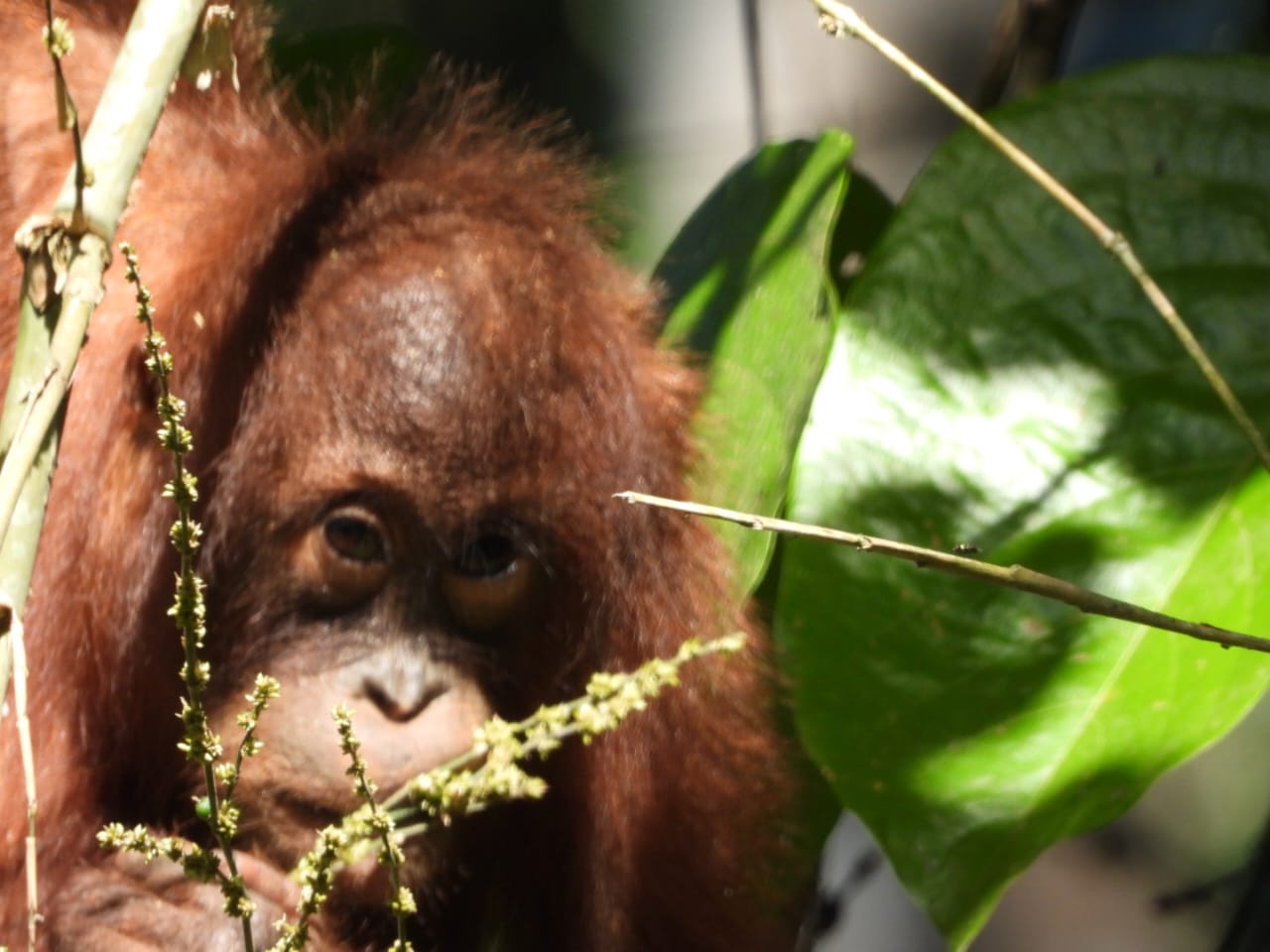
FAQ: Where is the best place to see wild orangutans in Sabah?
Answer:
The best place to see wild orangutans in Sabah is Deramakot Forest Reserve.
Located about 90 km from the quiet town of Telupid, Deramakot is one of Borneo’s hidden gems for wildlife enthusiasts. This 55,507-hectare lowland rainforest is home to a wide variety of rare and endangered species, including the elusive Bornean orang utan.
What makes Deramakot special is its long-standing commitment to sustainable forestry. Managed by the Sabah Forestry Department, it is the world’s first tropical forest to implement Reduced Impact Logging, certified by the Forest Stewardship Council (FSC) since 1997. This careful forest management has preserved Deramakot’s rich biodiversity, making it an ideal location for eco-tourism and wildlife observation.
Why visit Deramakot?
High chances of seeing wild orangutans in their natural habitat
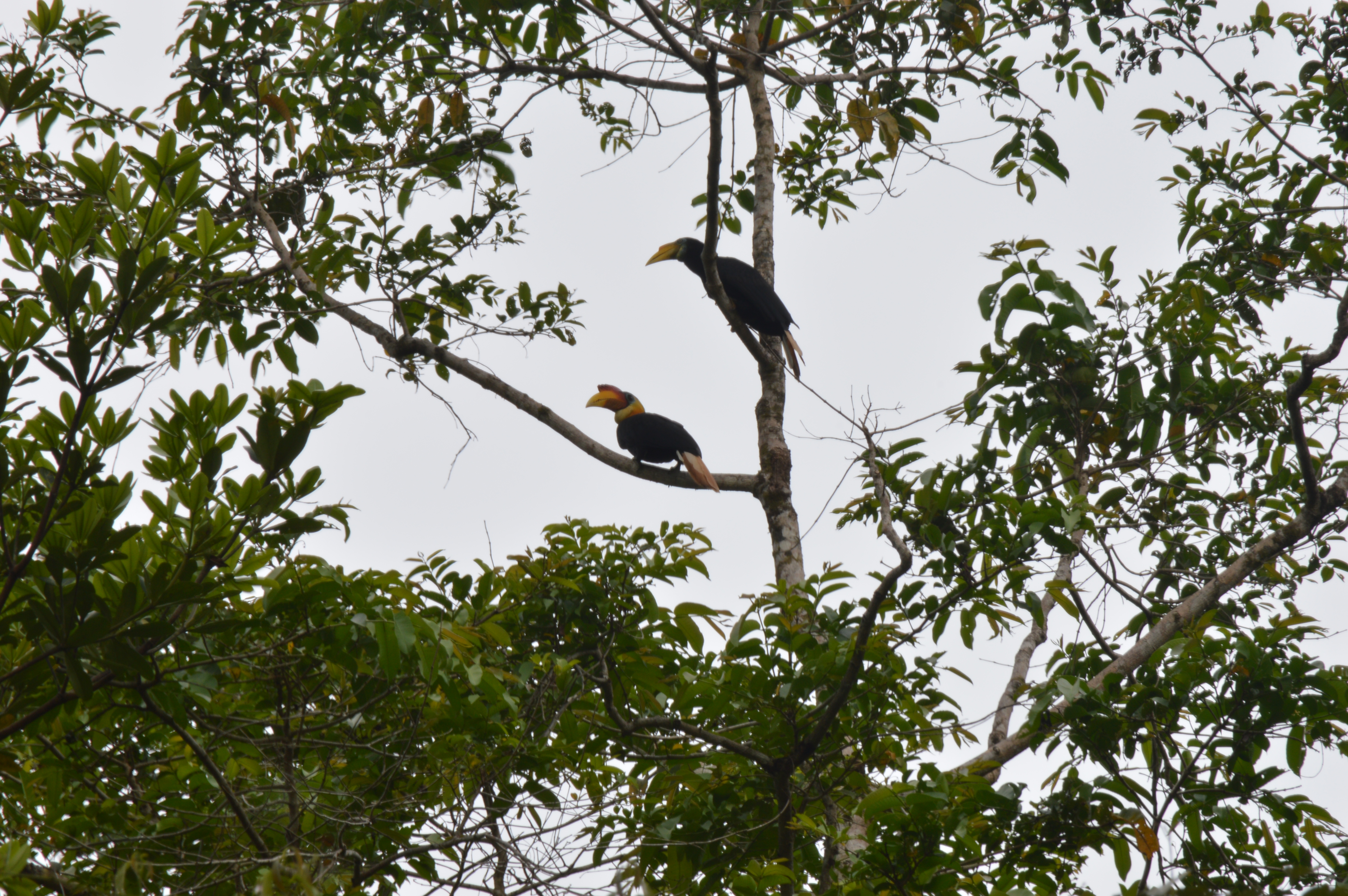
Excellent opportunities to spot other rare species such as clouded leopards, pygmy elephants, and hornbills
Peaceful, off-the-beaten-path location, perfect for nature lovers and photographers
Strong focus on sustainability and conservation
Tip: Access to Deramakot requires advance planning and a 4WD vehicle. Book through local licensed tour operators who arrange transportation, permits, and guides.
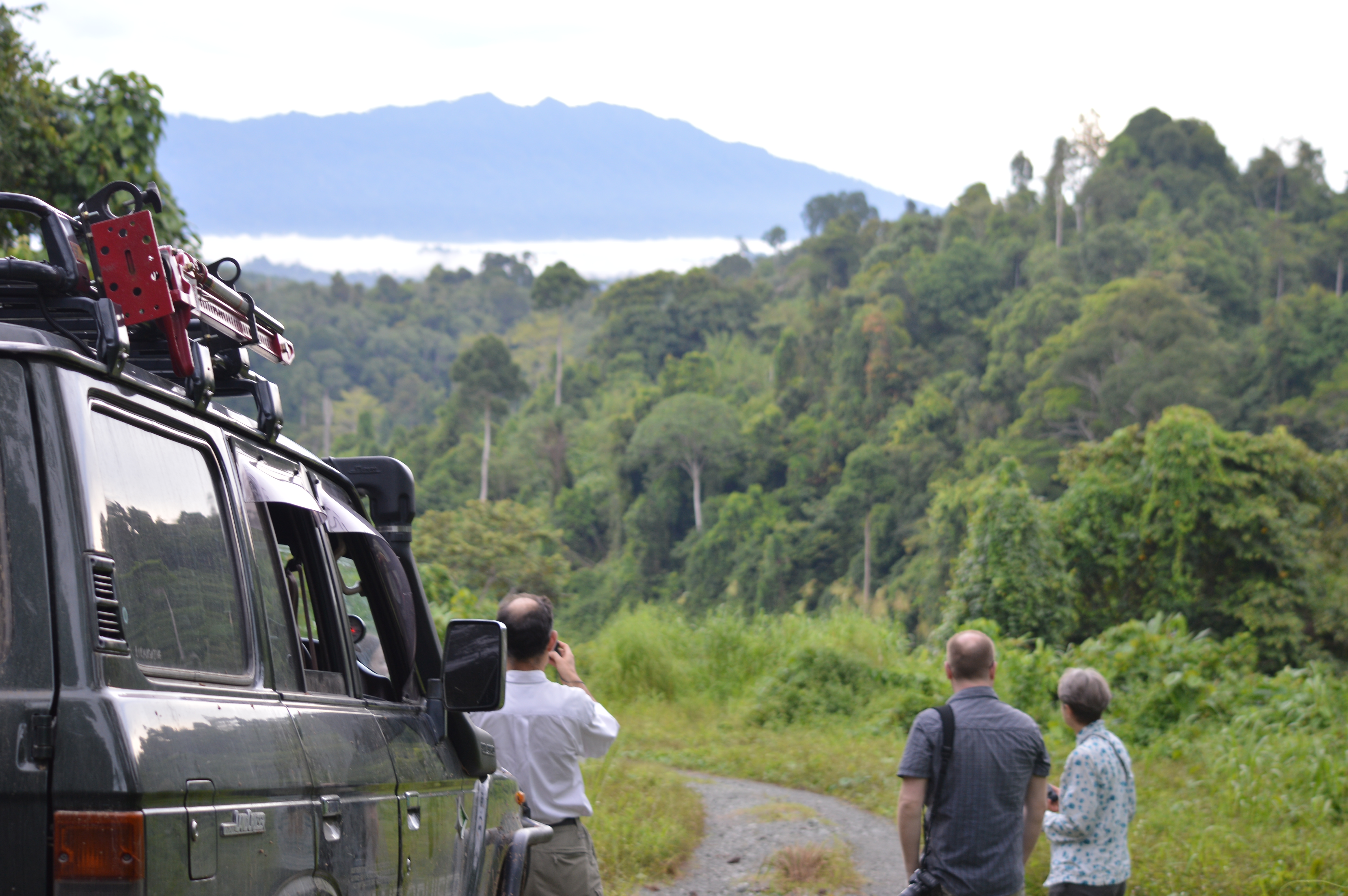
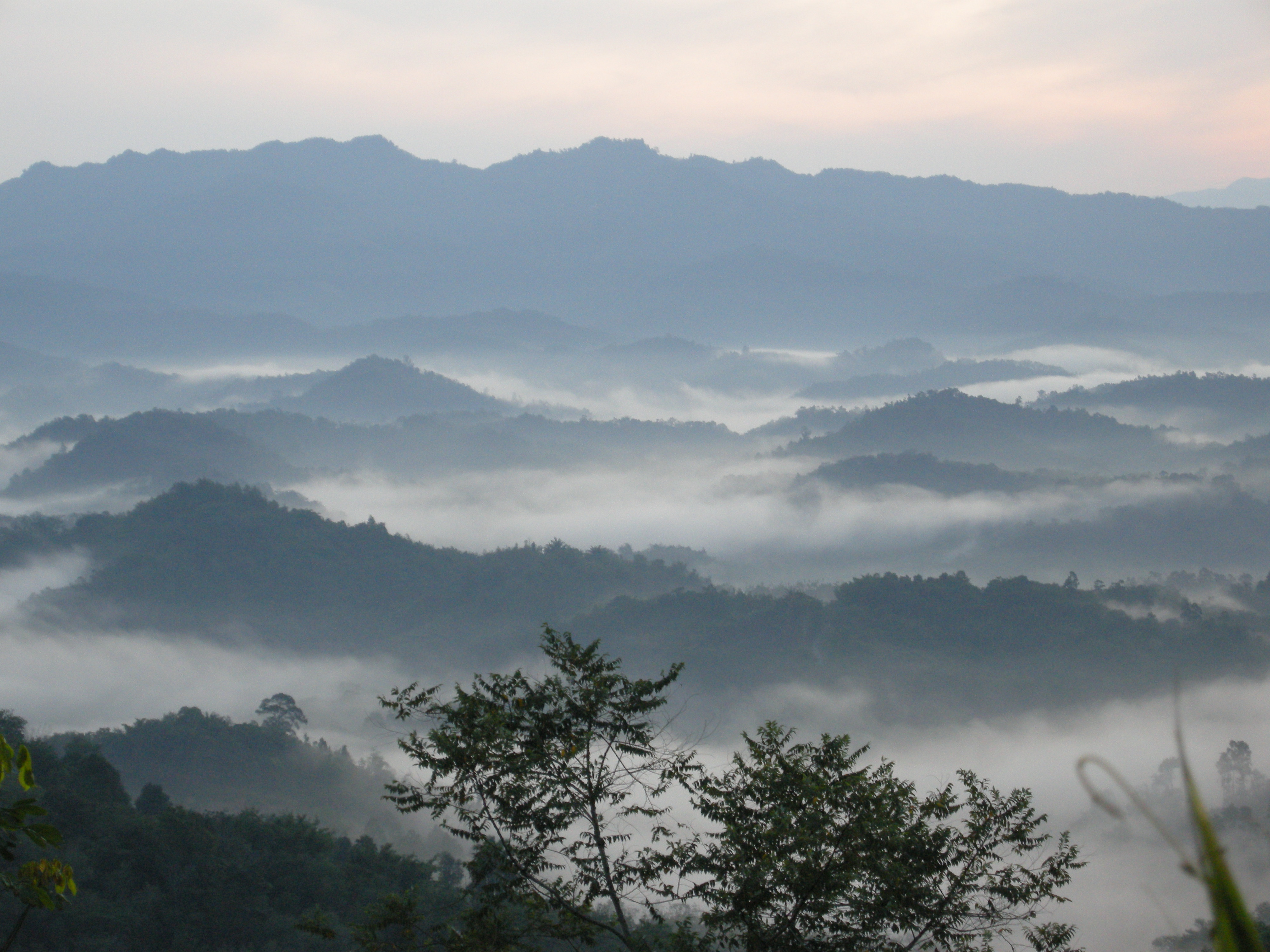

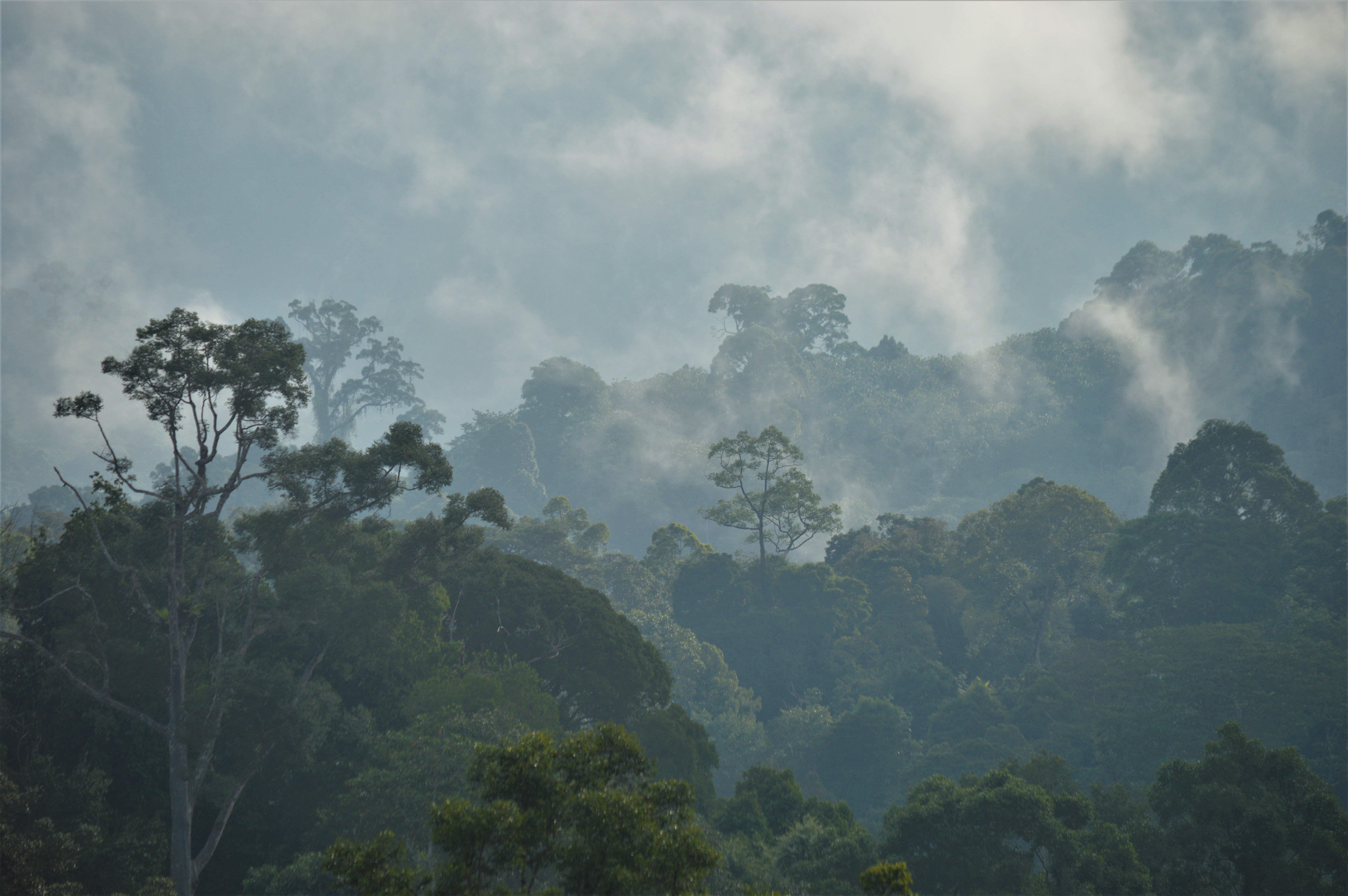
What makes Deramakot Forest Reserve unique?
Deramakot practices a concept called Reduced Impact Logging, where only carefully selected trees that cause minimal disturbance to the soil and surrounding forest are removed. This sustainable approach helps preserve the ecosystem while allowing for controlled timber harvesting.
To further support conservation efforts, eco-tourism is promoted as an alternative source of income, with a portion of tourism revenue contributing directly to the Ecological Conservation Fund.
Let’s skip the bla bla and get to the best part…
What wildlife can you see at Deramakot, besides orangutans?
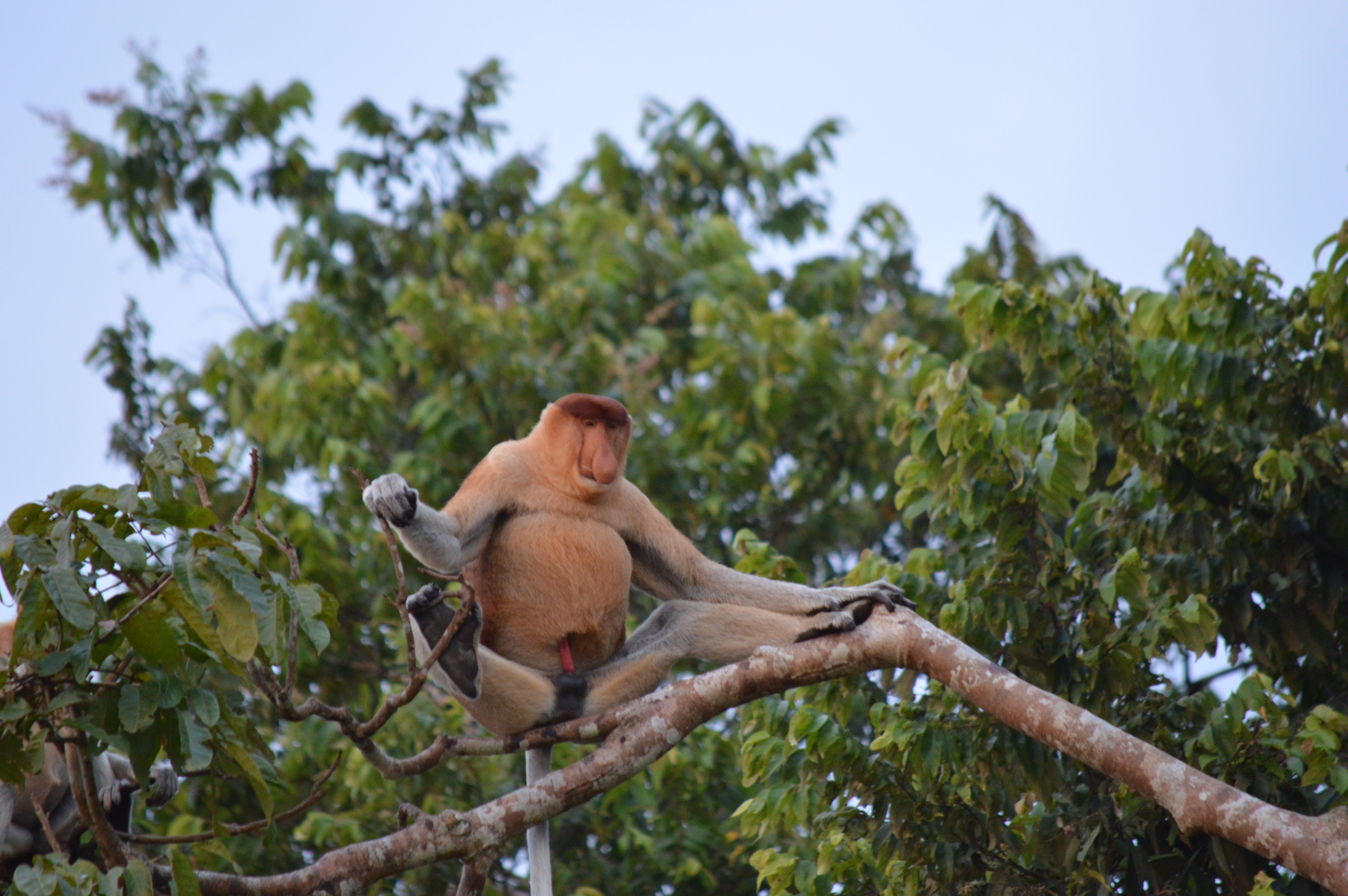
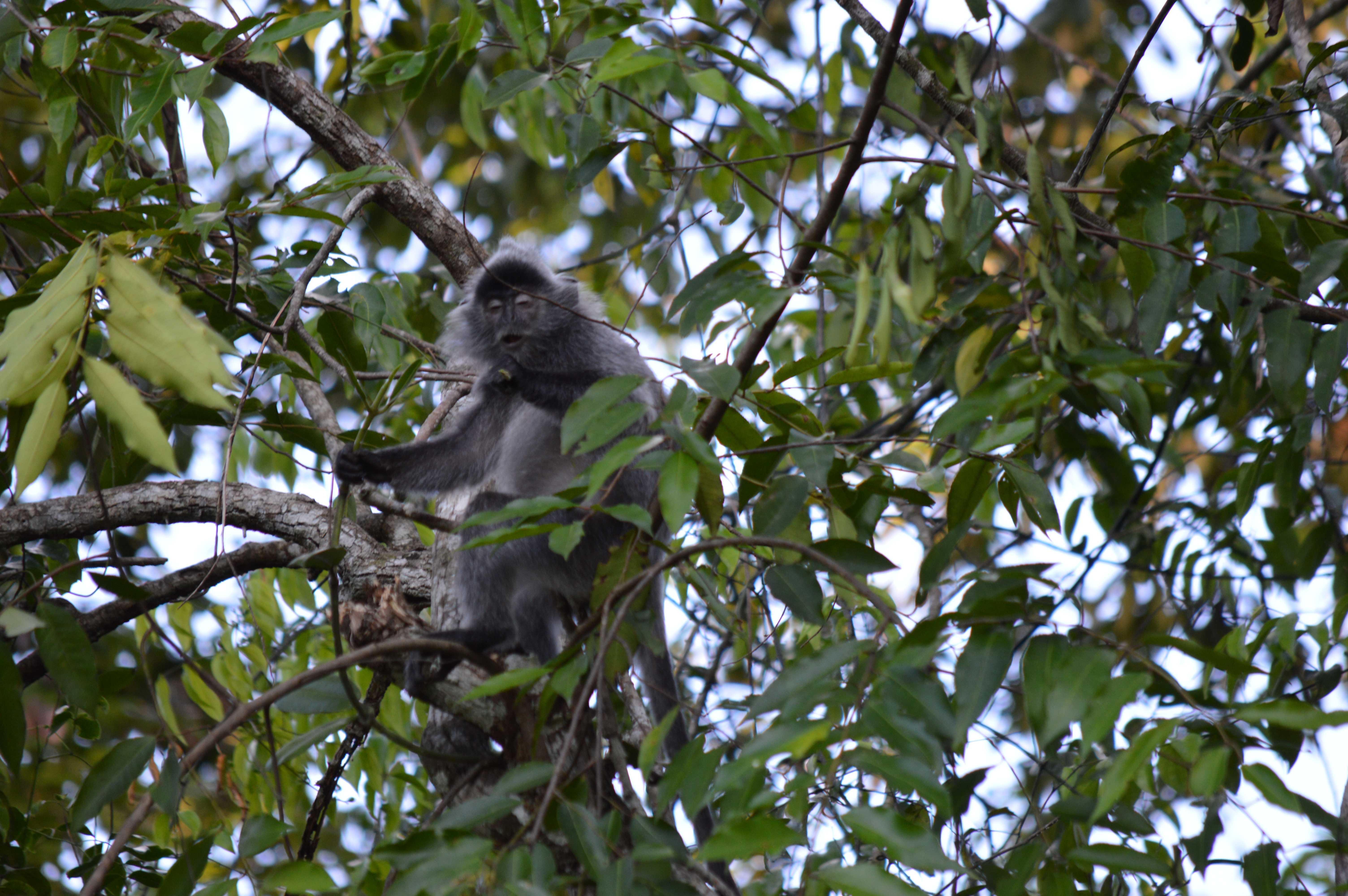
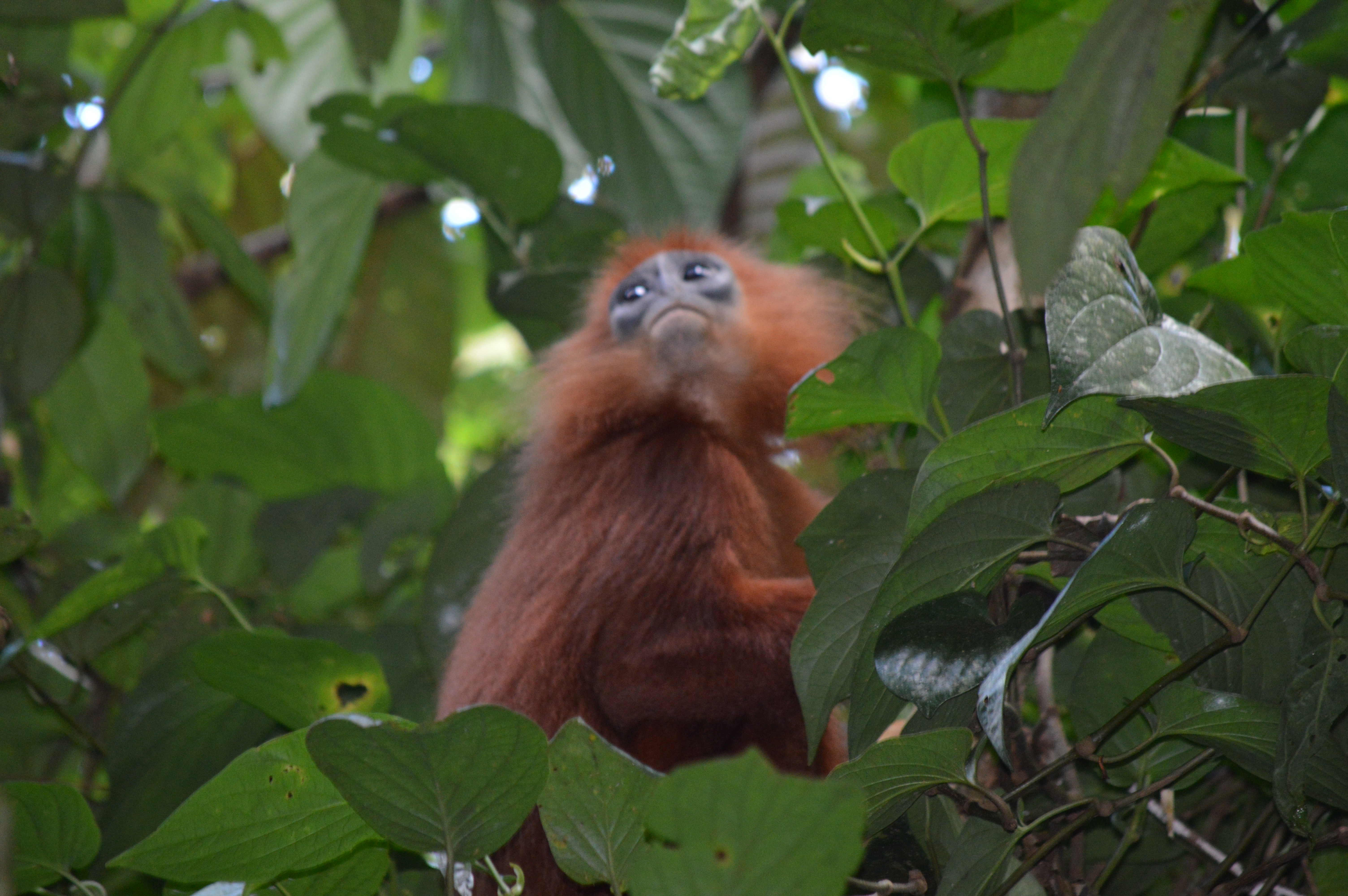
While wild orangutans are the star attraction, Deramakot is also home to an incredible range of primates and other wildlife:
🐒 Bornean Gibbon
🐒 Red Langur
🐒 Hose’s Langur
🐒 Long-tailed and Pig-tailed Macaques
And that’s not all—you may also spot clouded leopards, Bornean pygmy elephants, sun bears, civets, and a stunning variety of birds and insects, making it a true paradise for wildlife lovers and photographers.

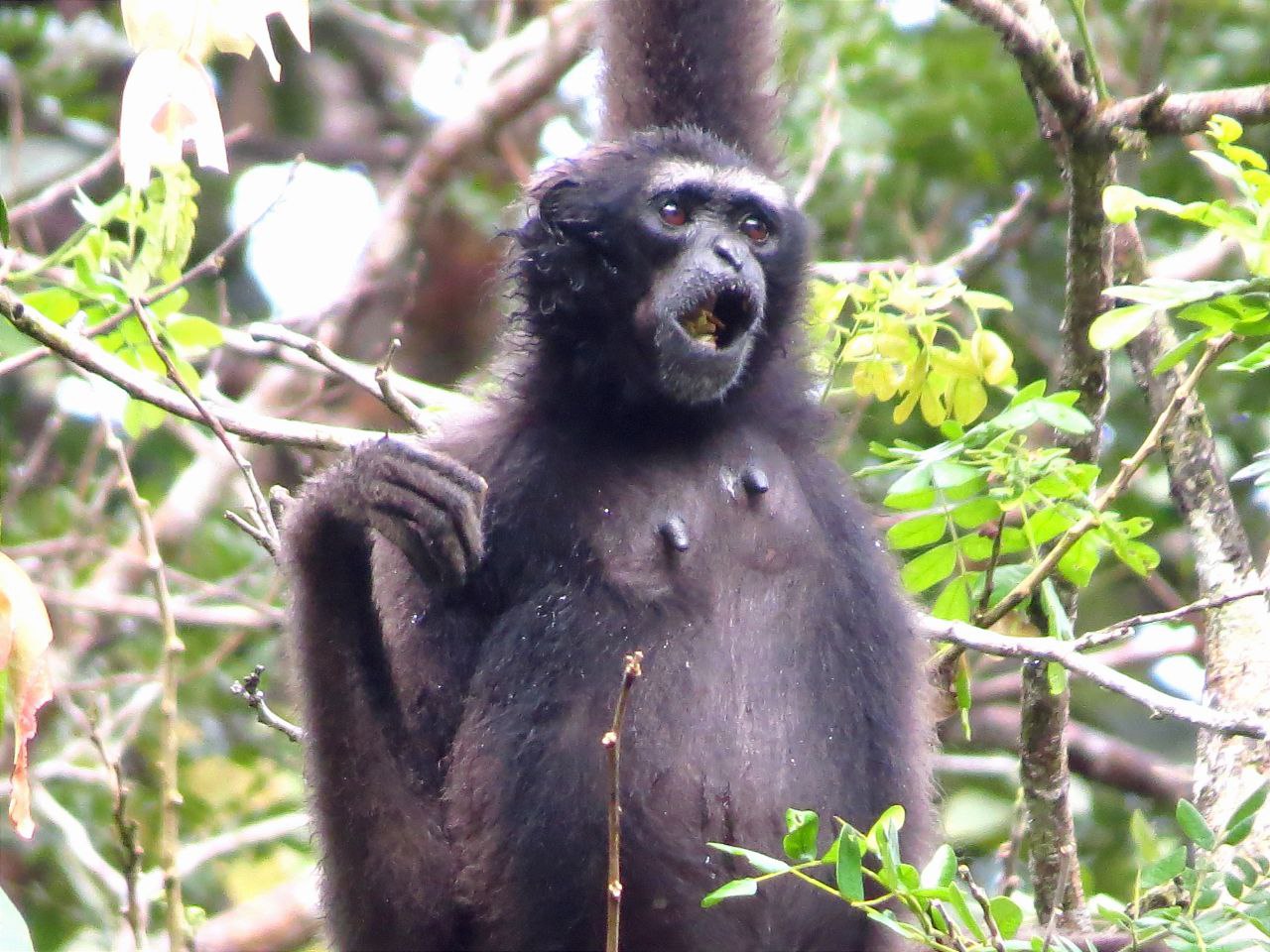
What other animals can you spot in Deramakot?
Beyond orangutans and primates, Deramakot Forest Reserve is a hotspot for rare and elusive large mammals and carnivores. Here’s what you might encounter:
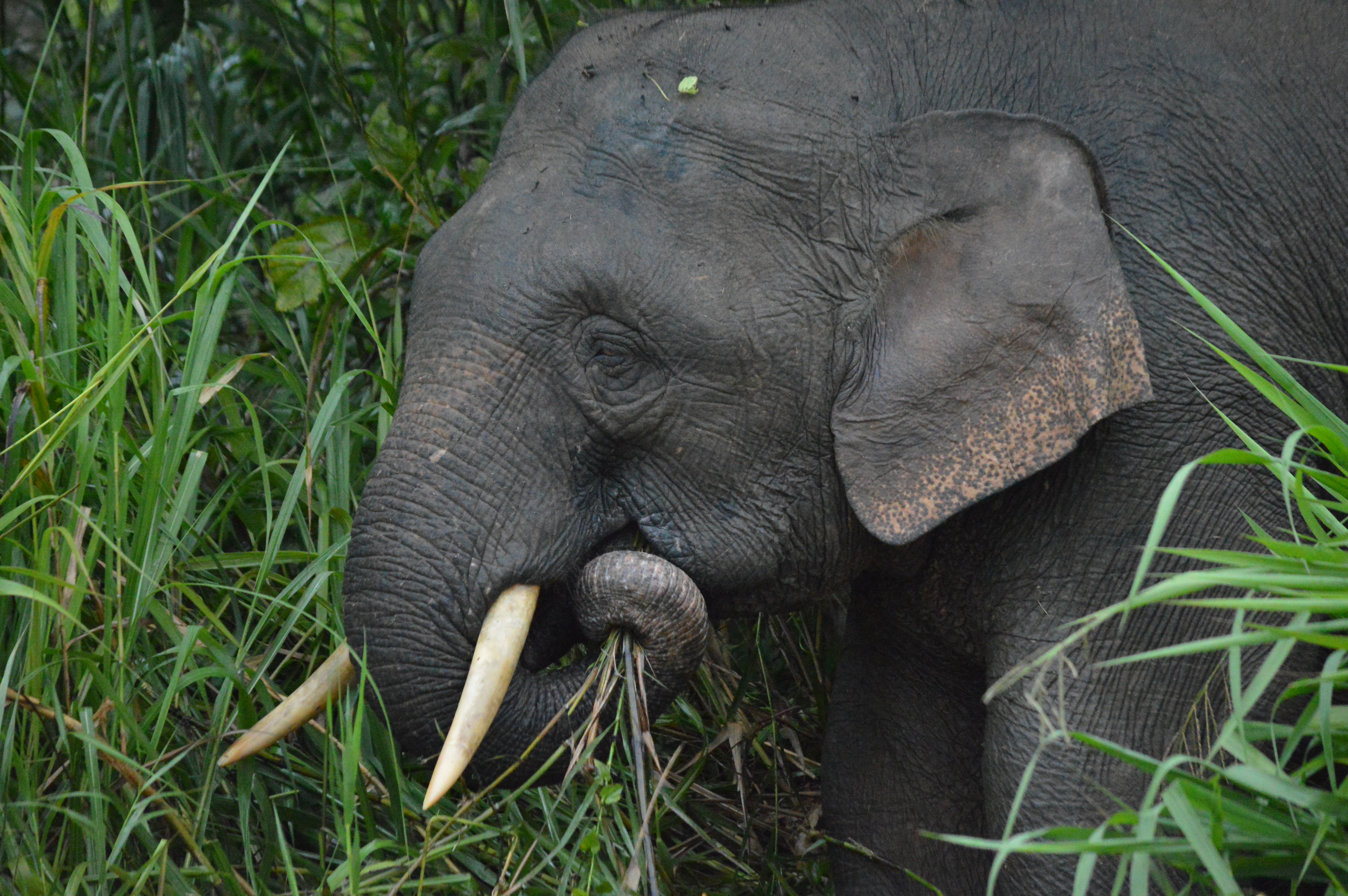
🦣 Bornean Pygmy Elephant
The smallest elephant species in Asia, known for their gentle nature and matriarchal herds.
🐃 Bornean Banteng
An endangered wild cattle species—rarely seen, but sometimes spotted grazing deep in the forest.
🐻 Sun Bear
The world’s smallest bear with an adorable but deceptive appearance—solitary, shy, and great tree climbers.
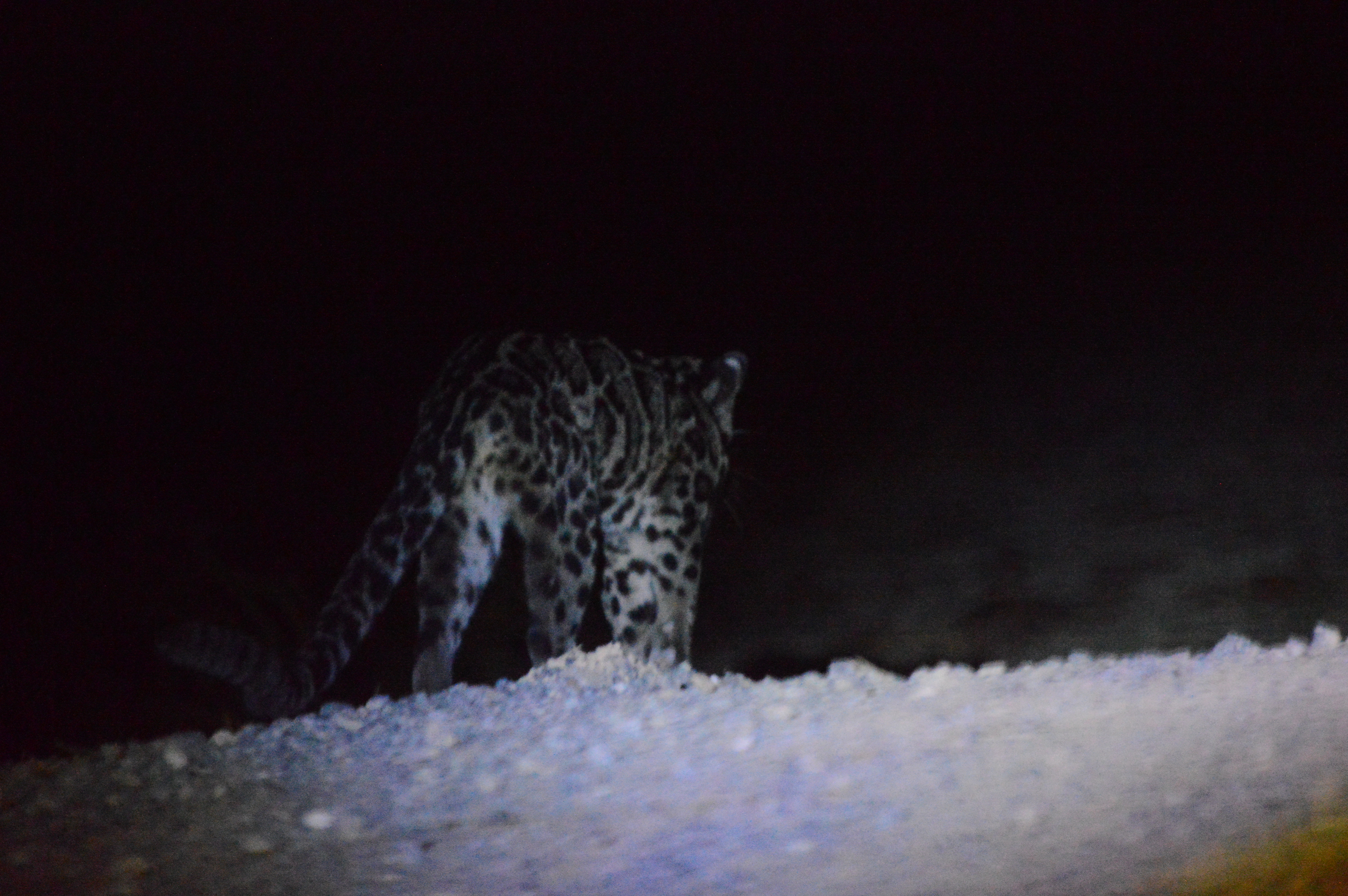
🐆 Clouded Leopard
An agile predator known for its ability to climb trees up to 20 meters high. Their large canines and mysterious behavior make them one of the most fascinating cats in the region.
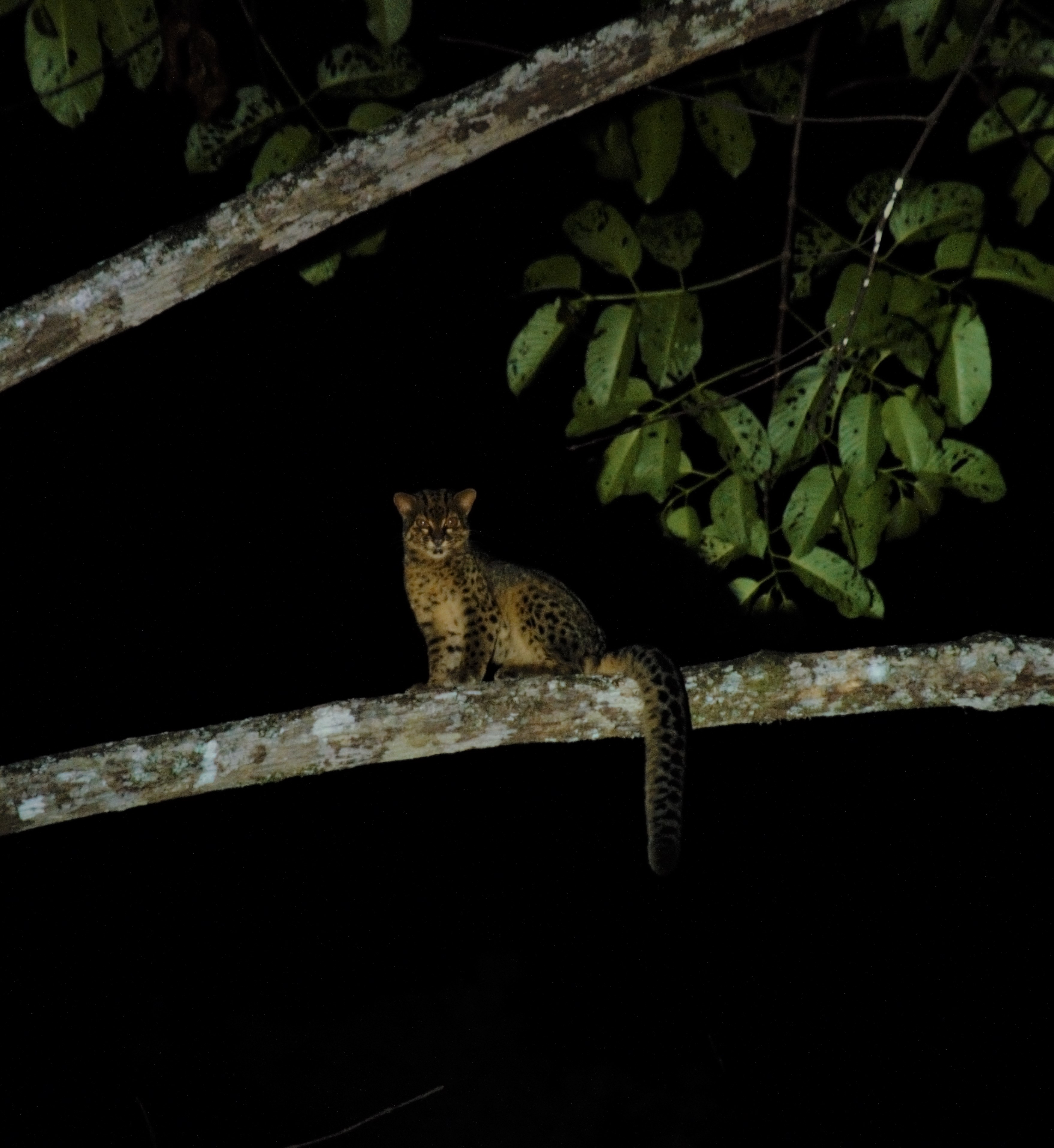
🐈⬛ Marbled Cat
Tree-loving and elusive, often mistaken for a small version of the clouded leopard due to its beautifully patterned coat.
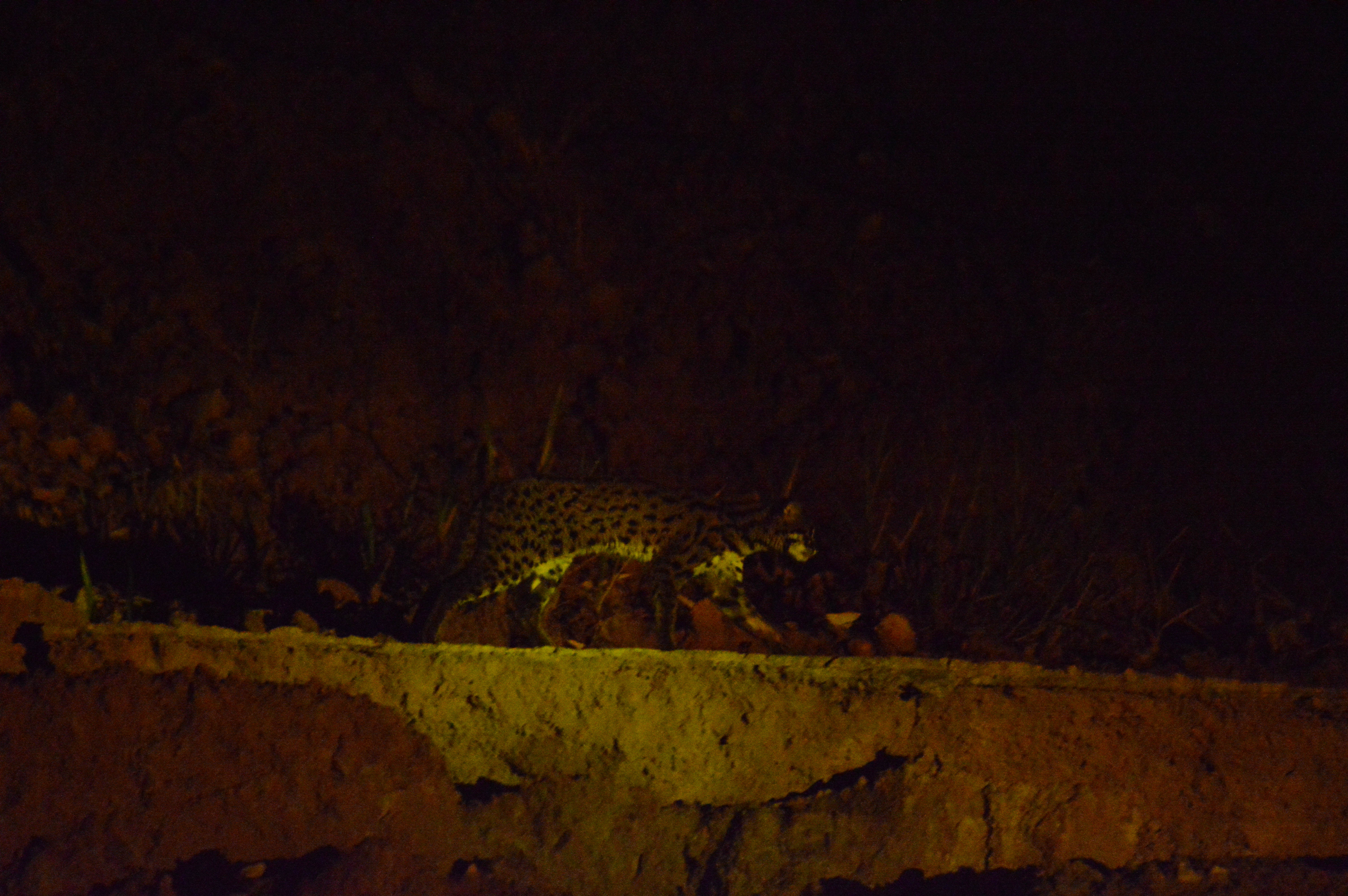
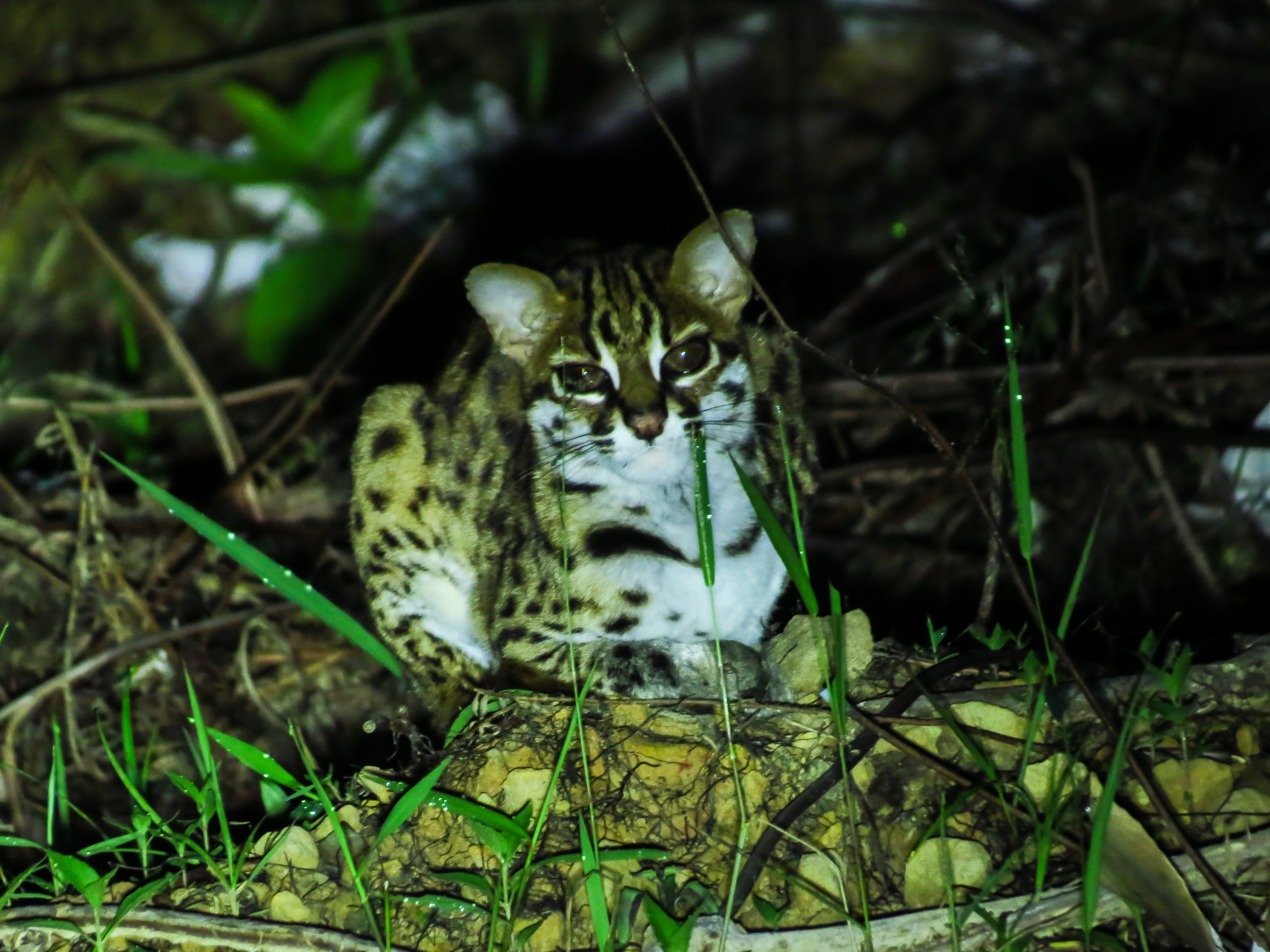
🐾 Leopard Cat
Unlike its tree-dwelling cousins, this ground-loving feline prefers to stay low and hidden in dense vegetation.
🎣 Fishing Cat
A rare semi-aquatic cat that, as the name suggests, loves fish. Sightings are extremely rare, but they do exist here!
🦊 Bornean Bay Cat
The crown jewel of Borneo’s wild cats—enigmatic, rarely seen, and still largely a mystery to science.
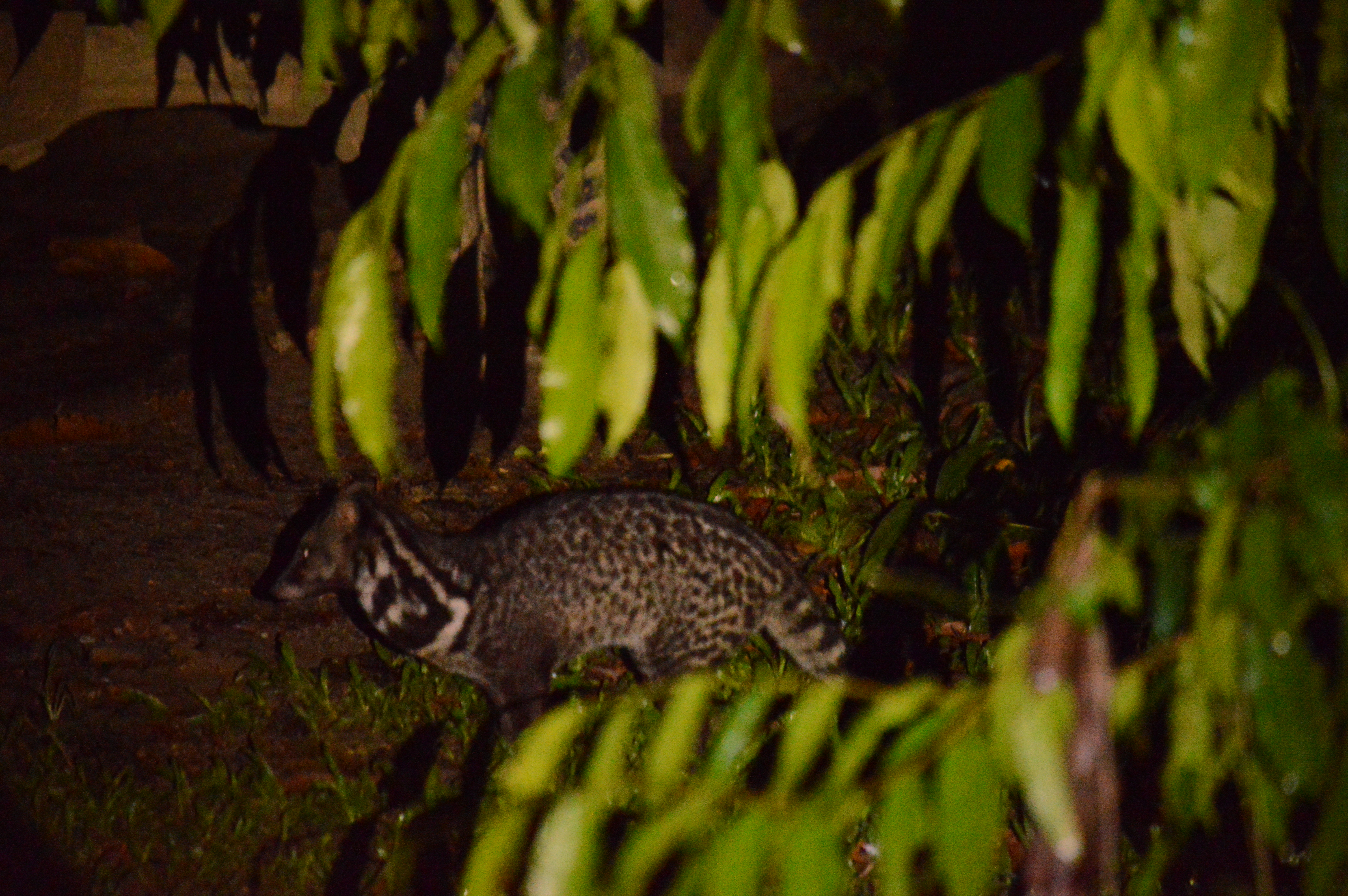
🦝 All 8 Species of Civets
Yes, all eight species found in Borneo live here—including the rare and nocturnal Otter Civet and Malay Civet.
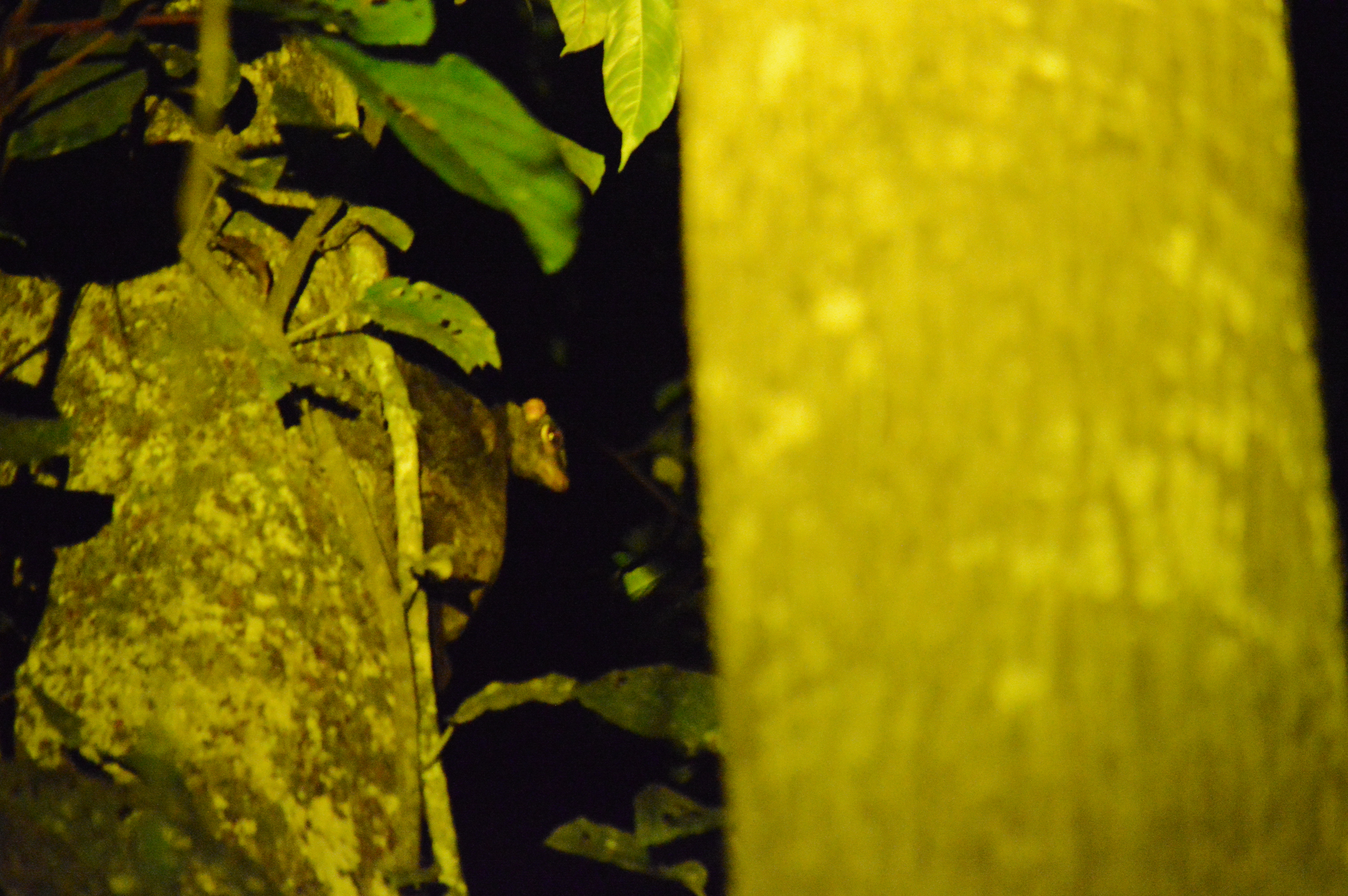
🐈⬛ Binturong (Bearcat)
Technically not a bear or a cat. Imagine if a sun bear and a civet had a baby—that’s pretty much what a binturong looks like. They smell like buttered popcorn and often hang out in the canopy!




Not a cat person? No worries.
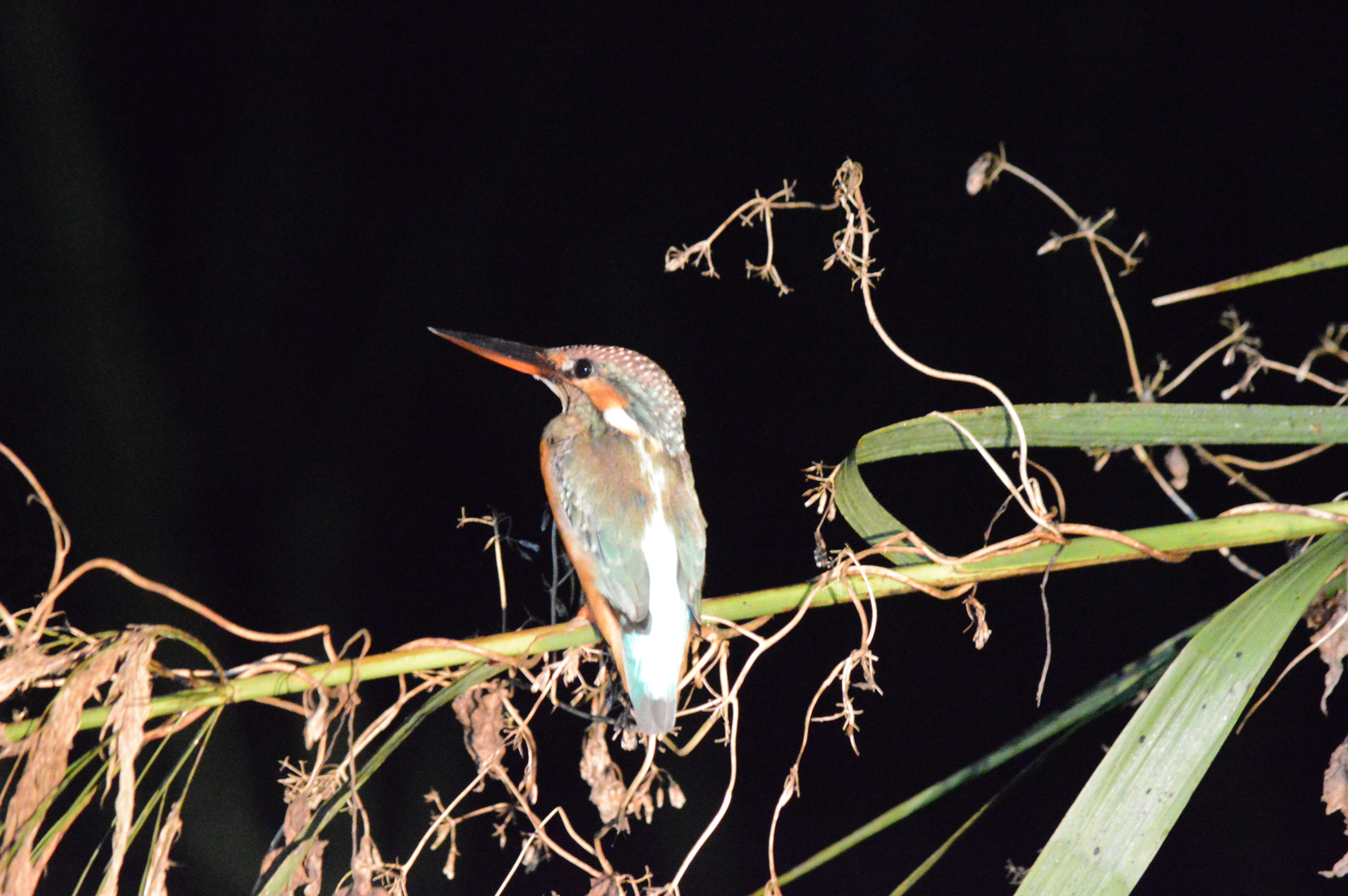
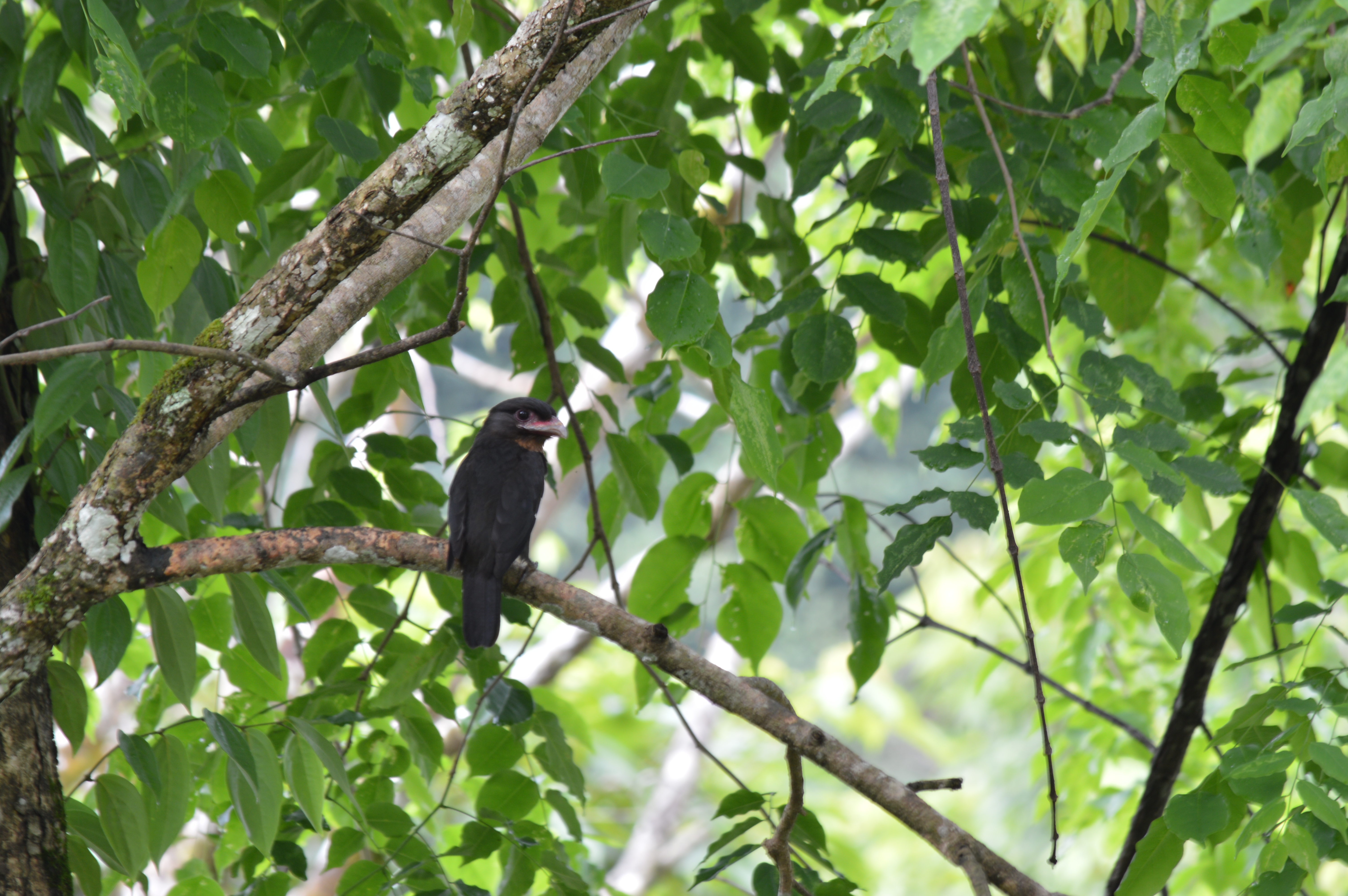
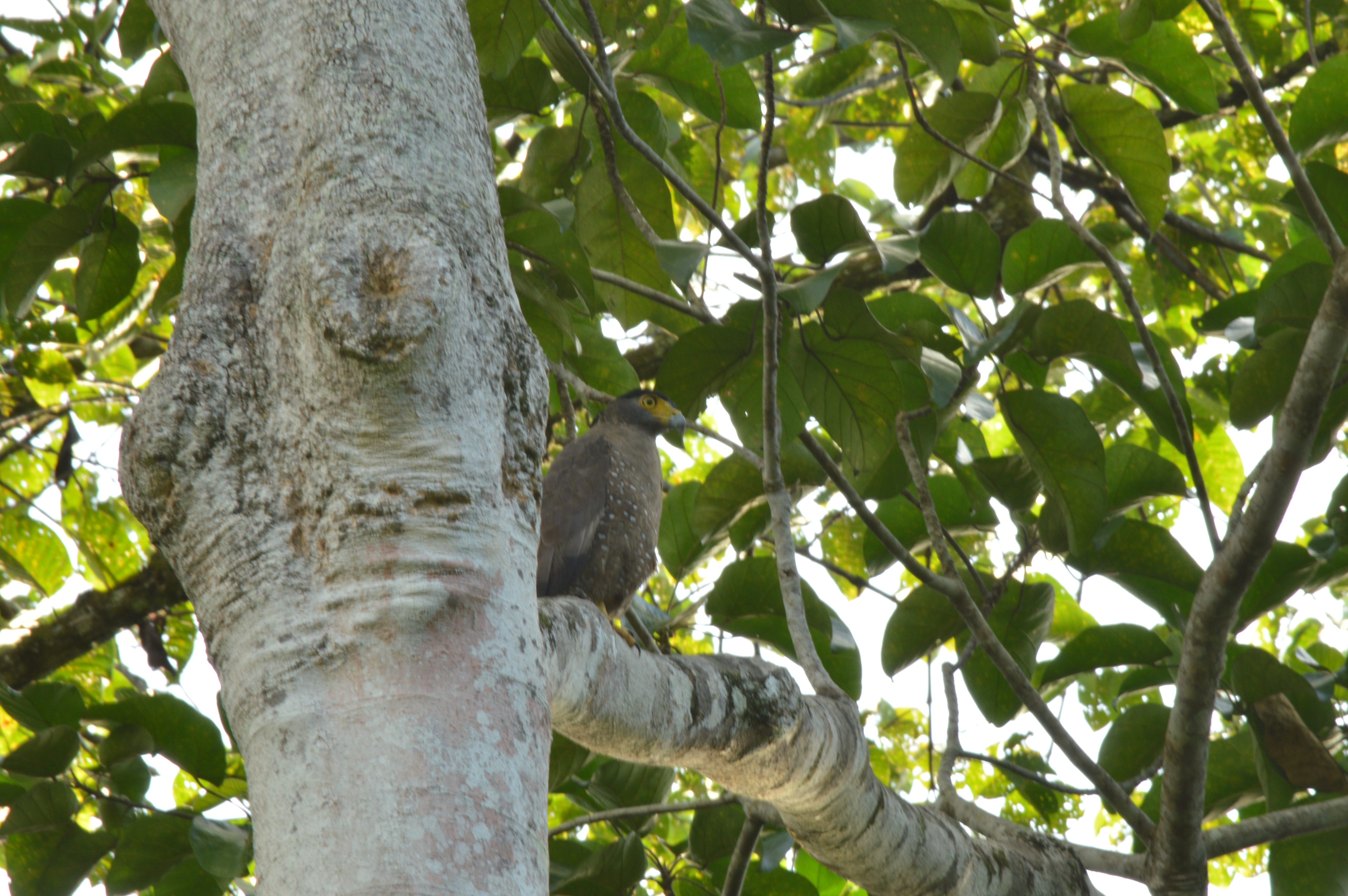
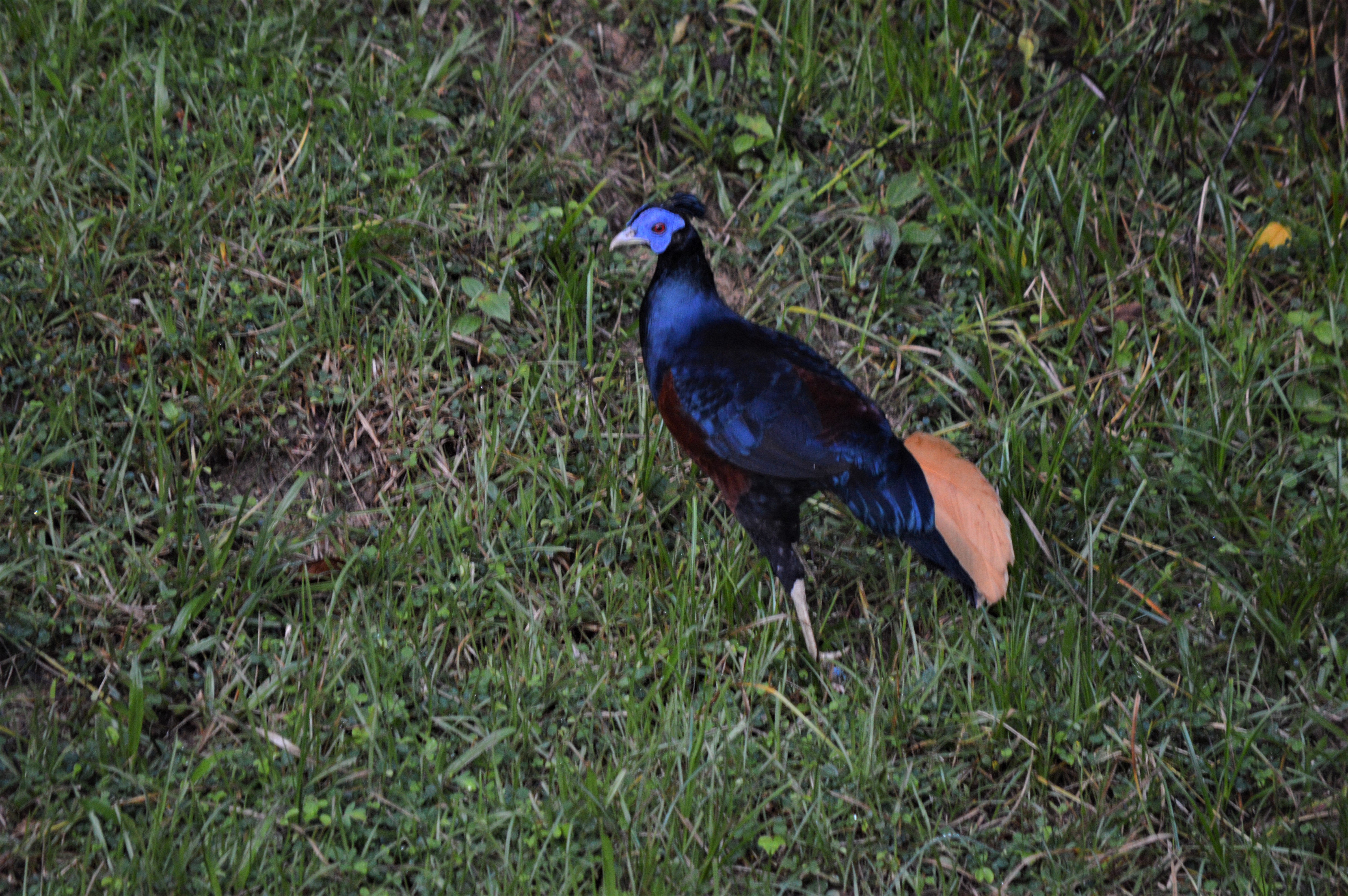
Deramakot isn’t just for big cat lovers—birdwatchers and nature lovers will feel right at home too. With over 200 species of colourful birds, this forest is alive with songs, calls, and flashes of vibrant feathers.
Bring your bird checklist, your binoculars (or that bazooka-sized lens), and find a quiet spot to sit back with a hot cup of coffee, tea, or whatever keeps you zen. Just relax and let the rainforest do the talking.
And if birds aren’t exciting enough, keep your eyes peeled for other ‘flying’ residents of the forest:
🦎 Flying Lizards
🐍 Flying Snakes
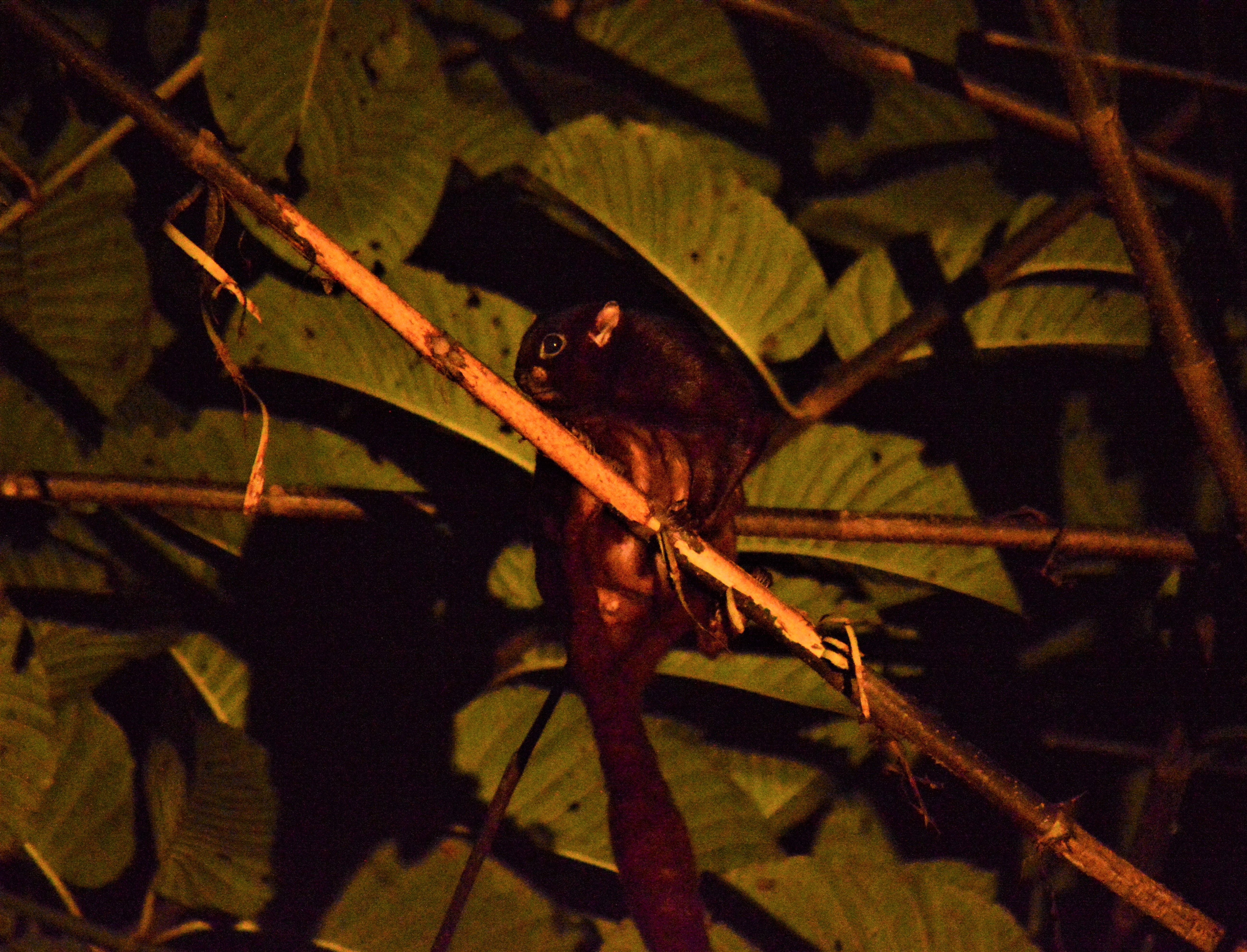
🐿️ Gliding Squirrels
Yes, they exist—and yes, they’re real. You never know what might glide, slither, or swoop past you. In Deramakot, there’s always magic in the trees.
Come for the orangutans. Stay for the surprises. You’ll definitely find happiness here.
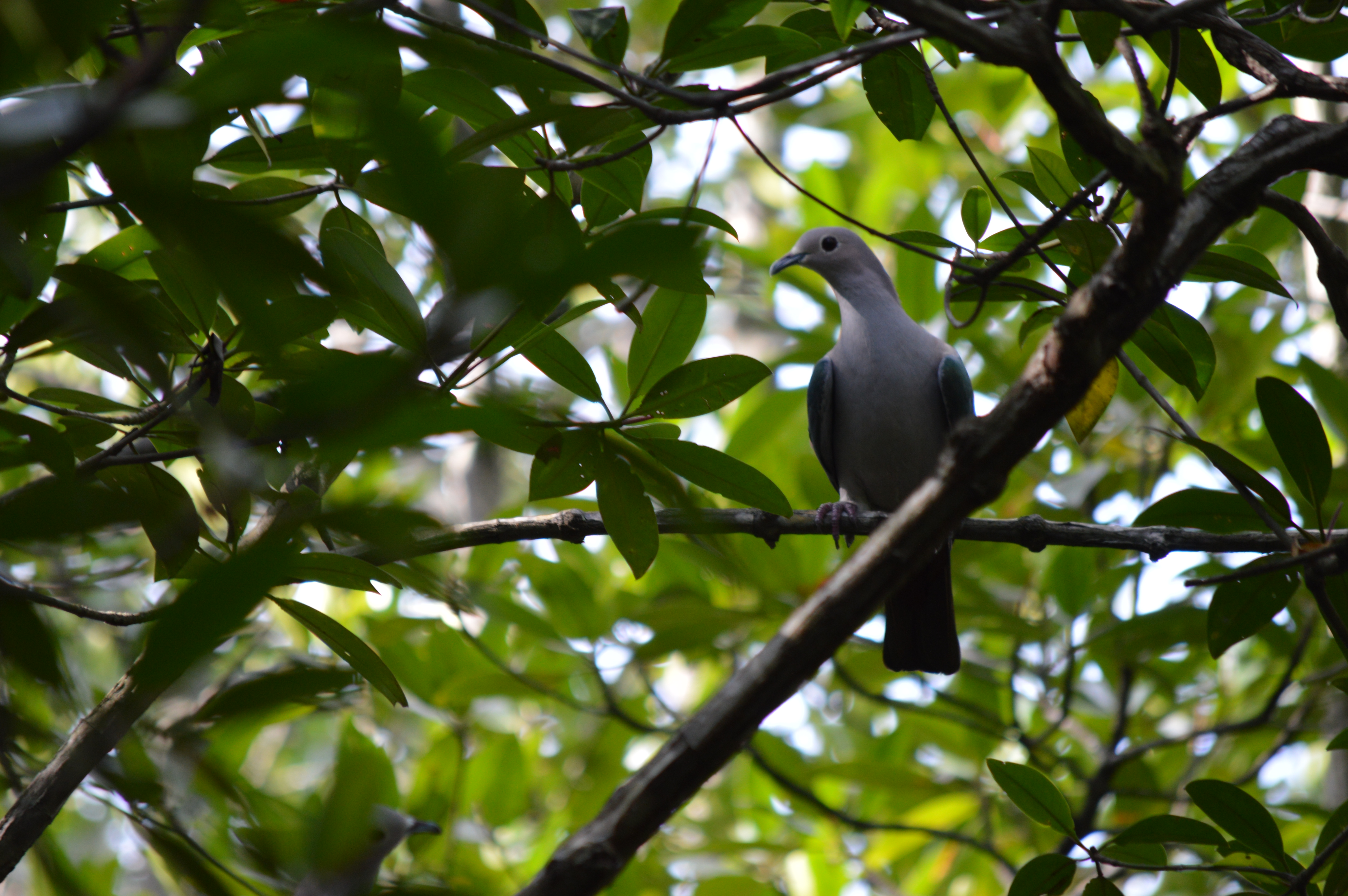
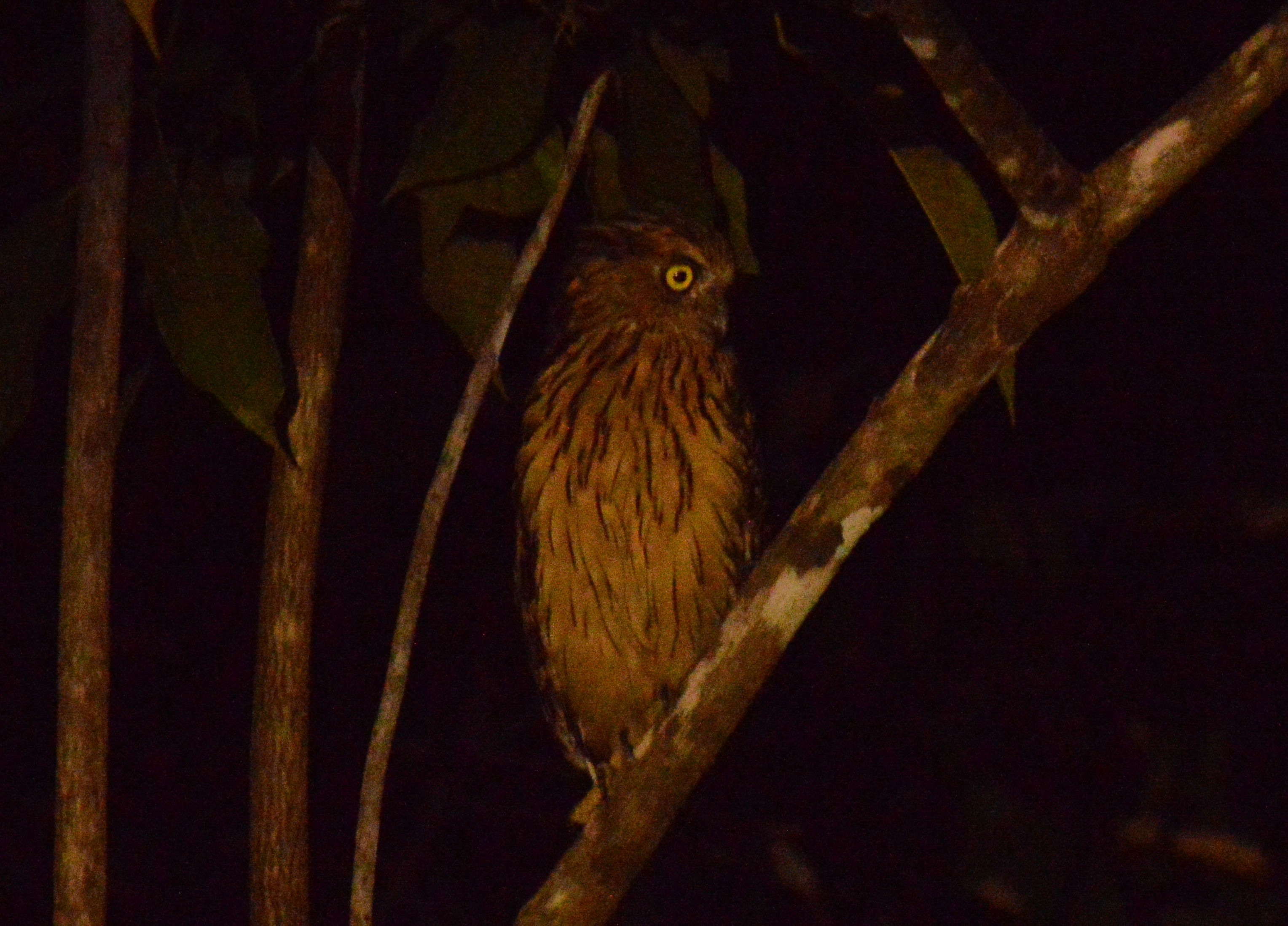
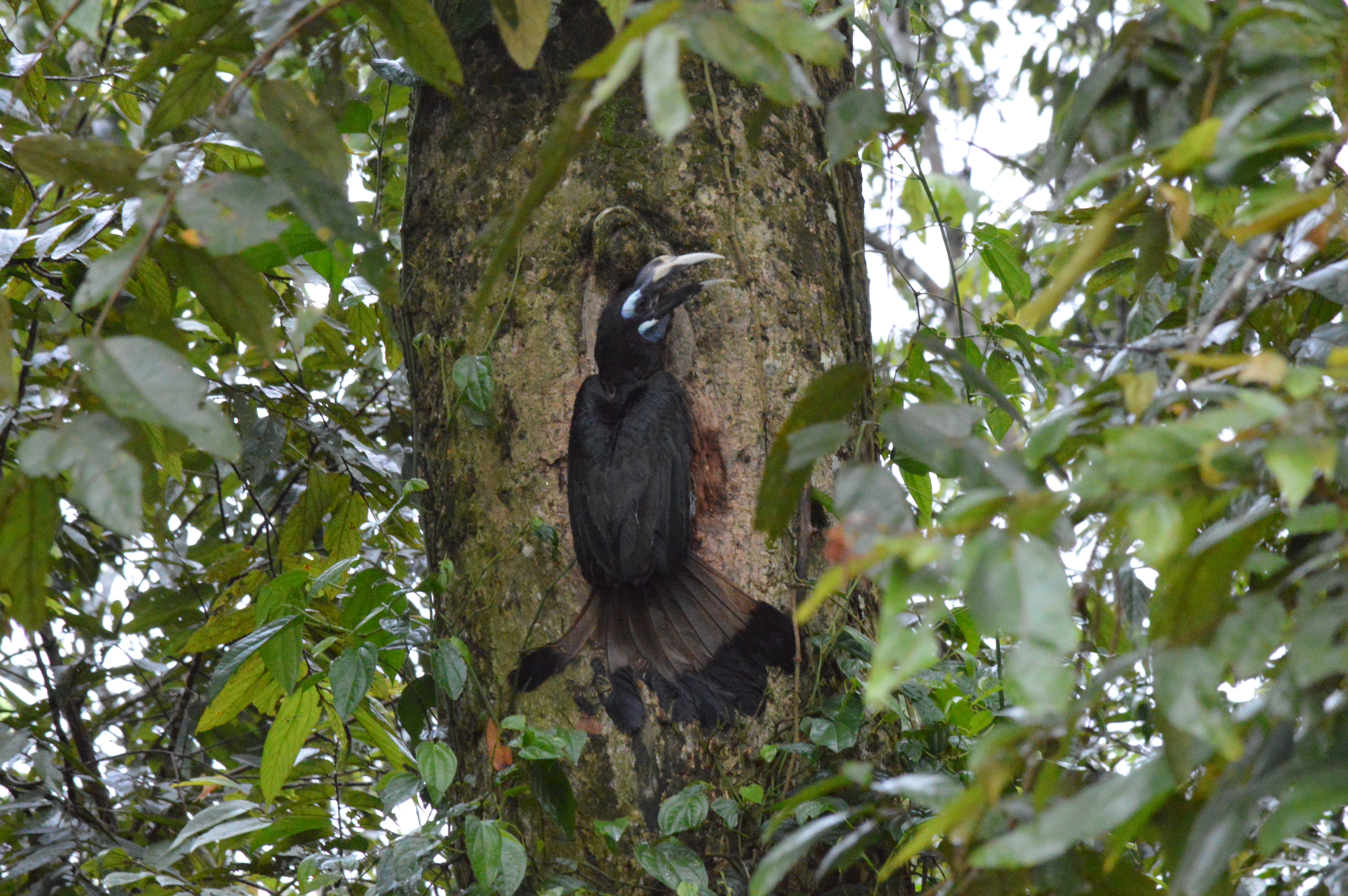
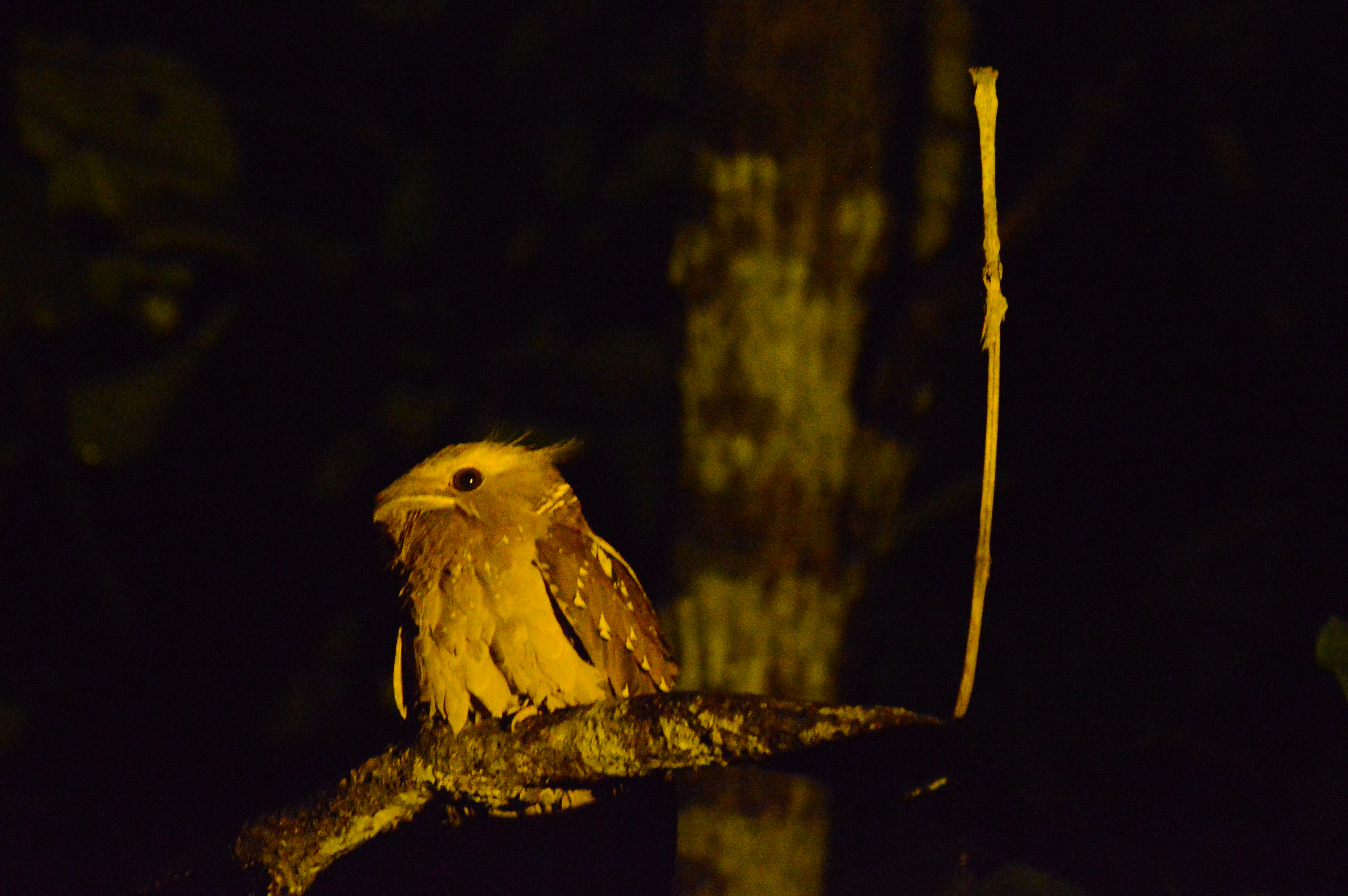





Not into mammals or birds? More into what they eat?
Ah, you’re one of the brave few—insect lovers. Don’t worry, my friend, you’re in for a treat. Or a shock. Or both.
Prepare to be amazed (and maybe a little spooked) by the jaw-dropping size of some of Borneo’s insects. I always tell my clients:
“In Africa, the grass is short and the animals are supersized—like a McDonald’s meal upgrade. In Borneo, it’s the other way around: our mammals may be smaller, but our insects? They’re massive. Supersized bugs, straight out of a sci-fi movie.”
Some of them honestly look like they crash-landed from Mars or Jupiter. Big, weird, alien-looking—and your macro lens will be doing cartwheels trying to capture their otherworldly details.
From giant stick insects to bulky beetles, colorful mantises, hairy spiders, and moths the size of your hand—this is a macro photographer’s paradise.
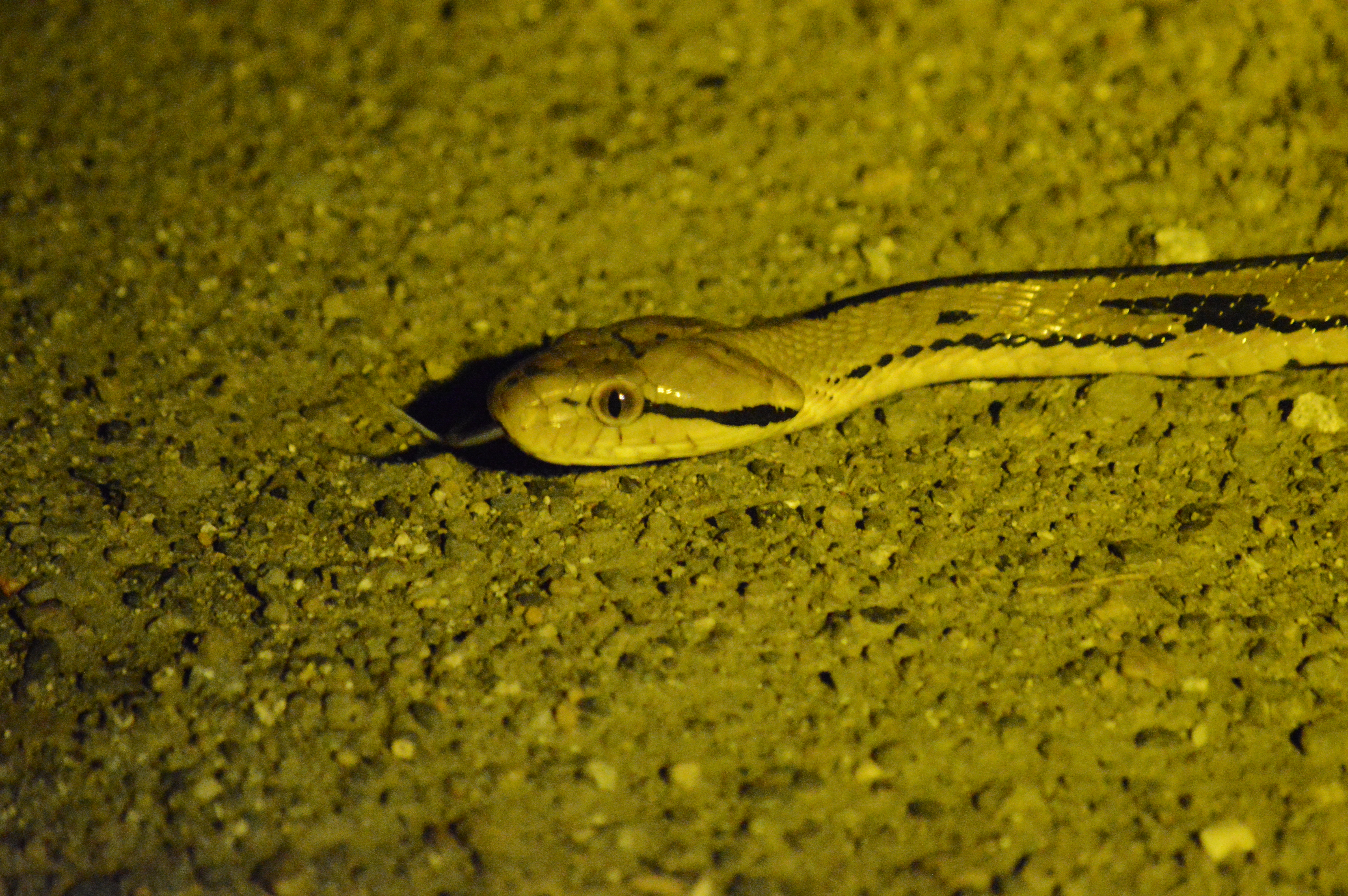
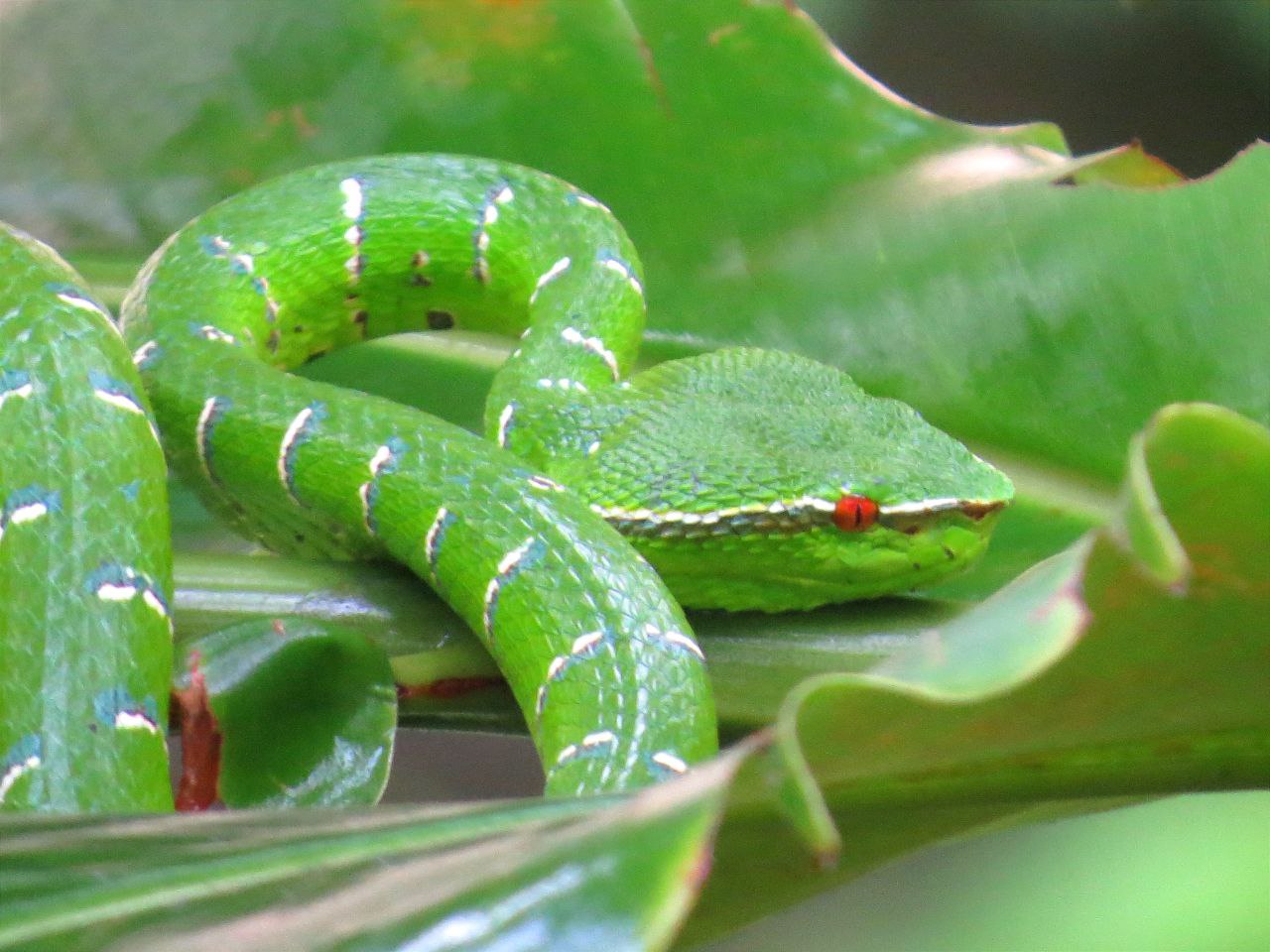
Oh, and yes… reptiles.
We’ve got big snakes, poisonous snakes, giant lizards, and more. But let’s skip this part because, personally, I’m not a fan of reptiles. 😅
(But my colleague? Absolutely obsessed—ask them for the full herpetology tour!)




FAQ 2: So… what does the accommodation look like?
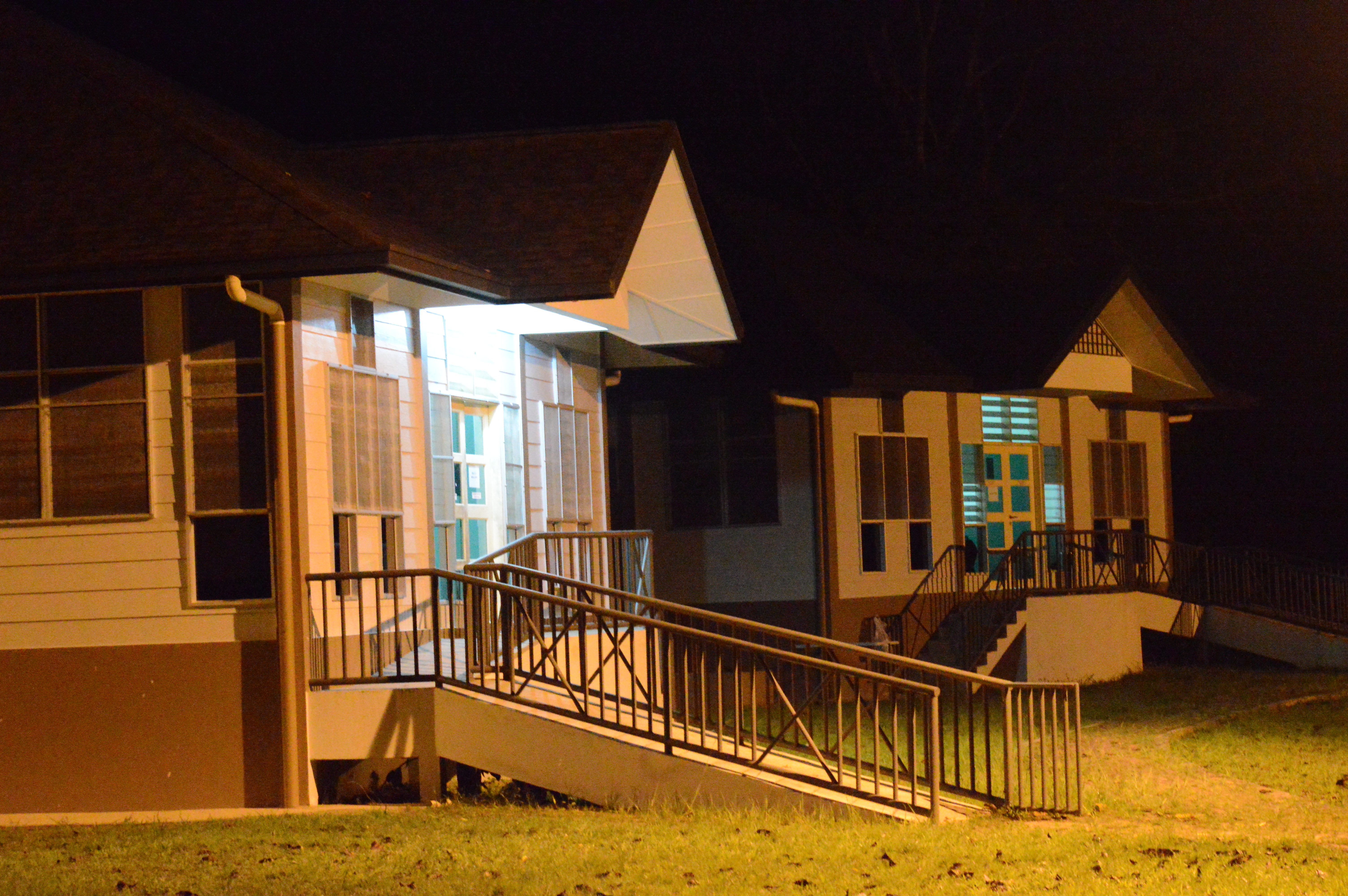
Take a look at the picture — this is simple, rustic comfort deep in the rainforest.
🏠 Facilities include:
Rooms with attached bathrooms
Hot showers and Western-style toilets
24-hour electricity (thanks to an on-site generator)
This isn’t a luxury resort, but it’s clean, comfortable, and gives you the rare chance to stay right in the heart of one of Borneo’s best wildlife areas. And yes, you’ll sleep well after a full day of adventure.
FAQ 3: What about food?
No jungle survival skills needed here!
Before entering Deramakot, your guide will stop in town to stock up on fresh vegetables, meat, fruits, bottled water, and everything needed to keep you well-fed.
🍽️ Meals are home-cooked and prepared daily at the lodge by your guide or camp staff. Expect local flavors, hearty meals, and hot drinks to enjoy during your downtime. Special dietary needs? Just let your guide know in advance.
Tip: Bring along your favorite snacks or instant coffee if you have a specific craving — options are limited once you’re inside the reserve.

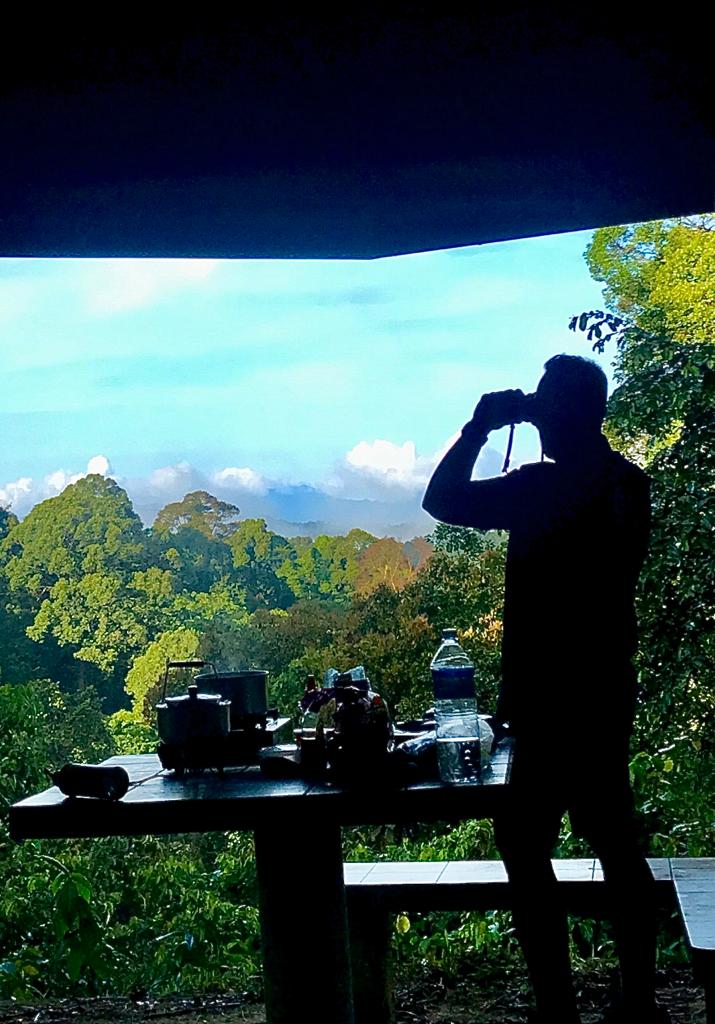
FAQ 4: So how do you find the animals?
There are two main ways to spot wildlife in Deramakot — and both are pretty awesome.
🛻 1. Safari Drive
Hop on the back of an open-top 4WD truck and cruise slowly along the old logging roads. Your guide — equipped with hawk eyes and a lifetime of jungle experience — will help you spot animals hidden in the trees, underbrush, or casually crossing the road. Day or night, this is your best chance to see larger mammals, like orangutans, elephants, civets, and maybe even a wild cat or two.
🥾 2. Jungle Walks
If you’re up for a bit of adventure, head out on foot with your guide along established logging road. This method is perfect for spotting primates, birds, insects, and getting up close to the forest’s finer details — like animal tracks, unique plants, and sounds that you’d miss on a drive.
Tip: Most guests do both — safaris in the morning or evening, and guided walks during the day for a full Deramakot experience.

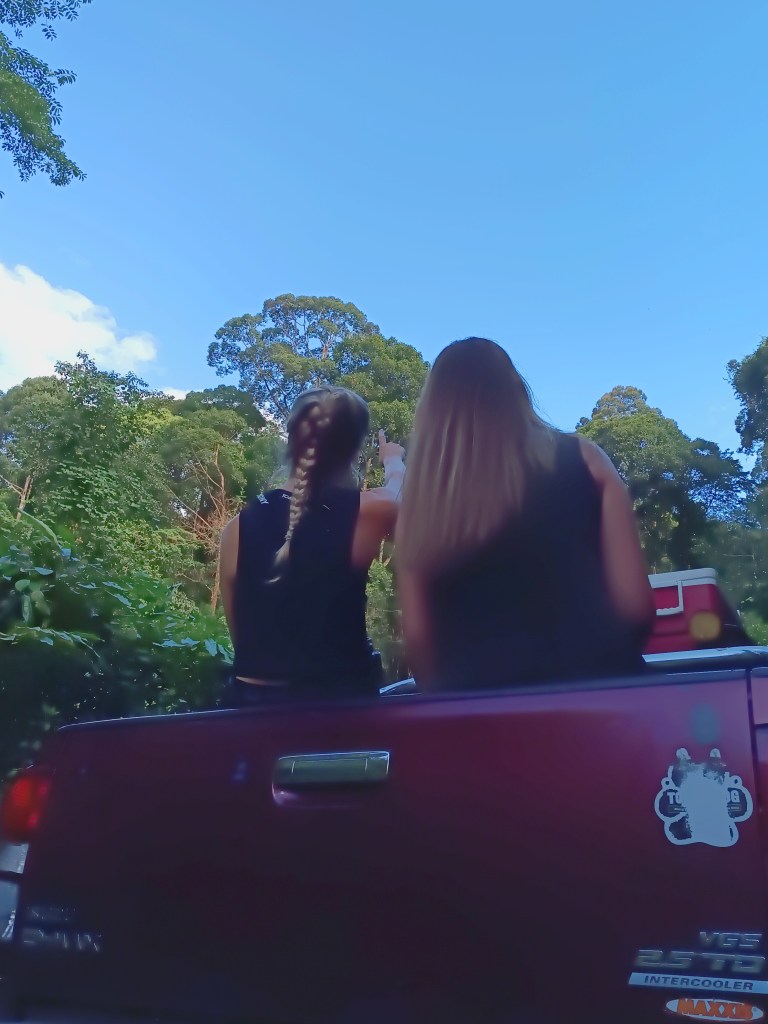
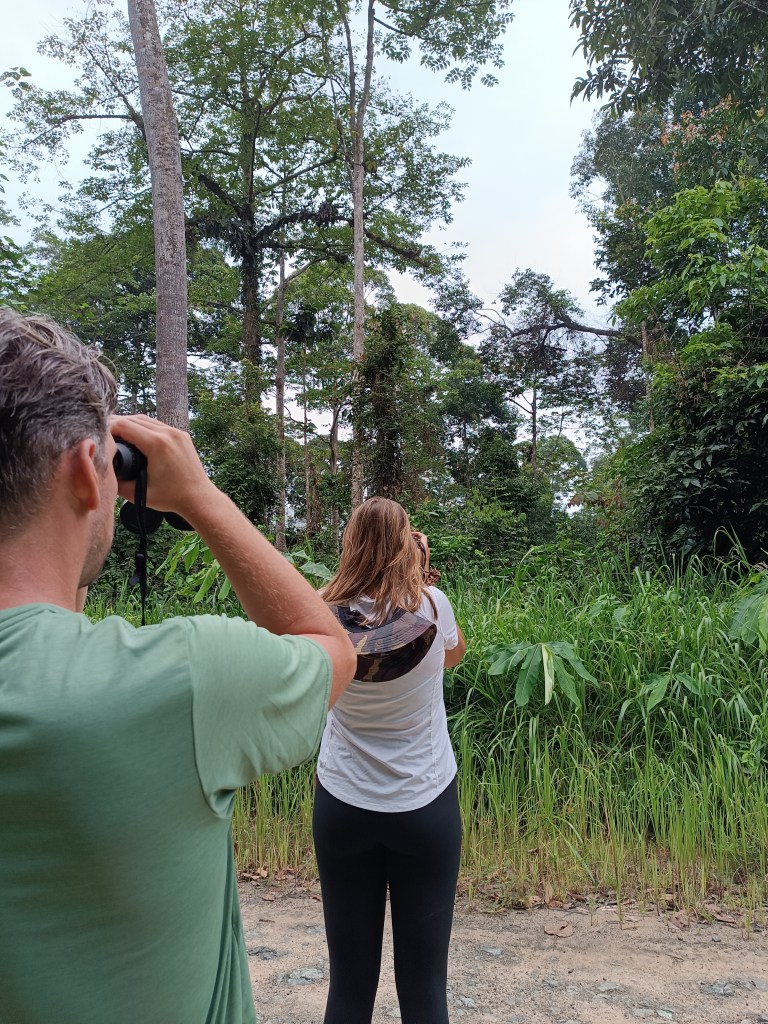

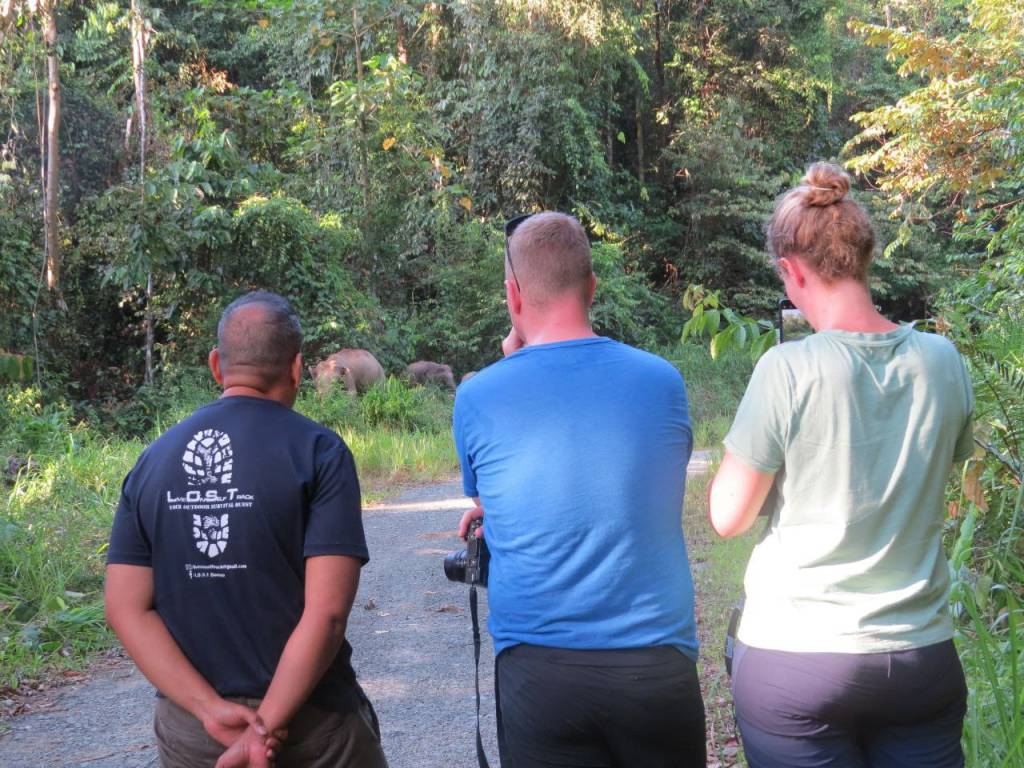
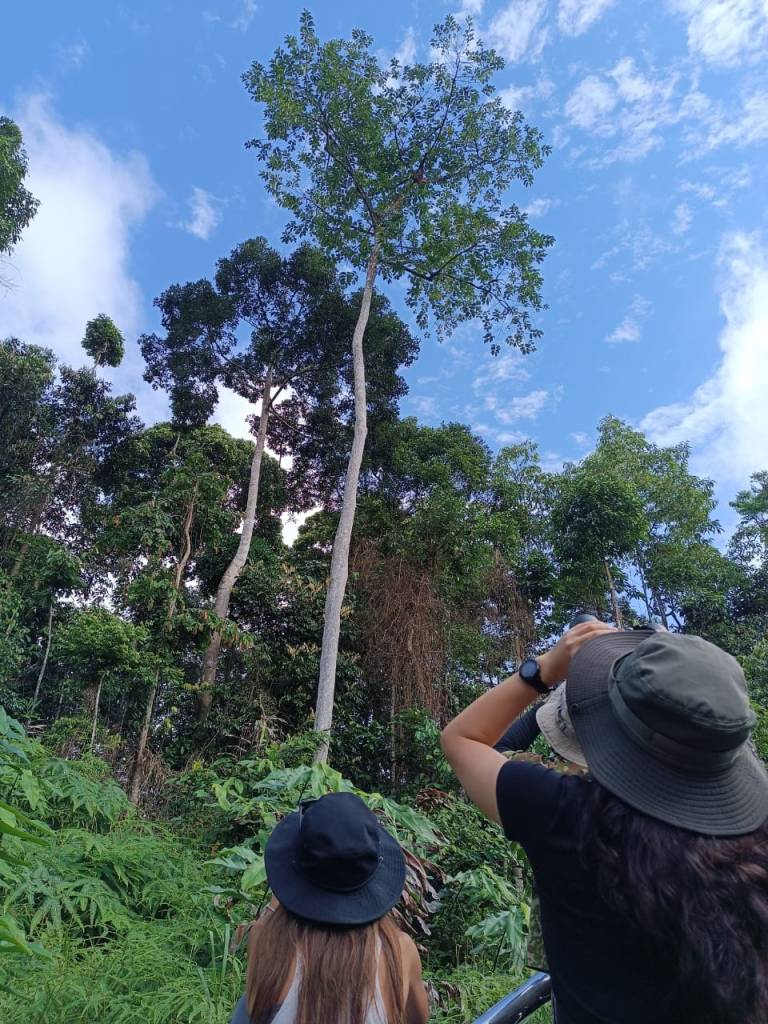
FAQ 5: What kind of wildlife activities can you expect in Deramakot?
Whether you’re a night owl, an early riser, or somewhere in between, there’s always something wild happening in the forest. Here’s how each part of the day comes alive:
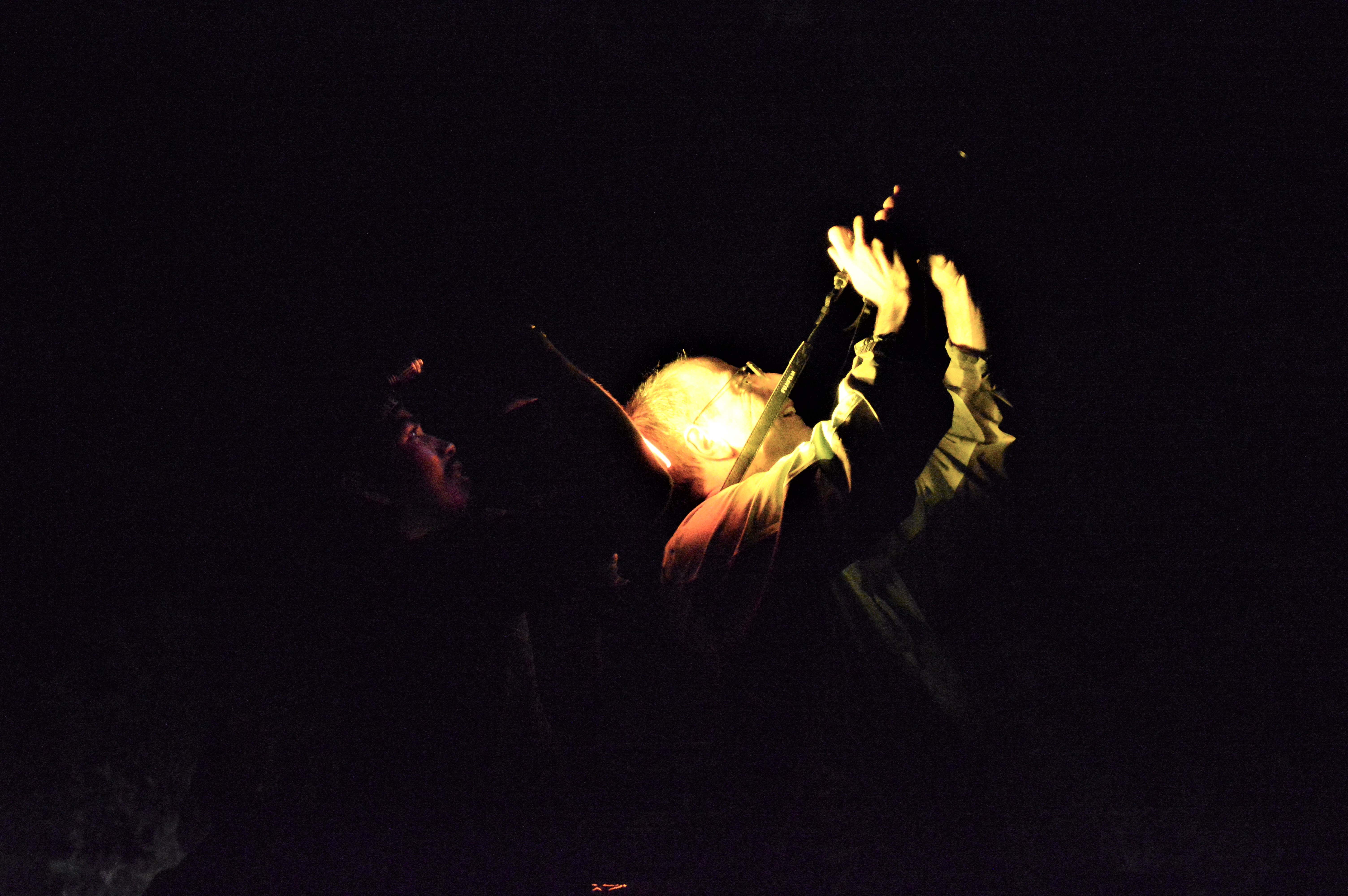
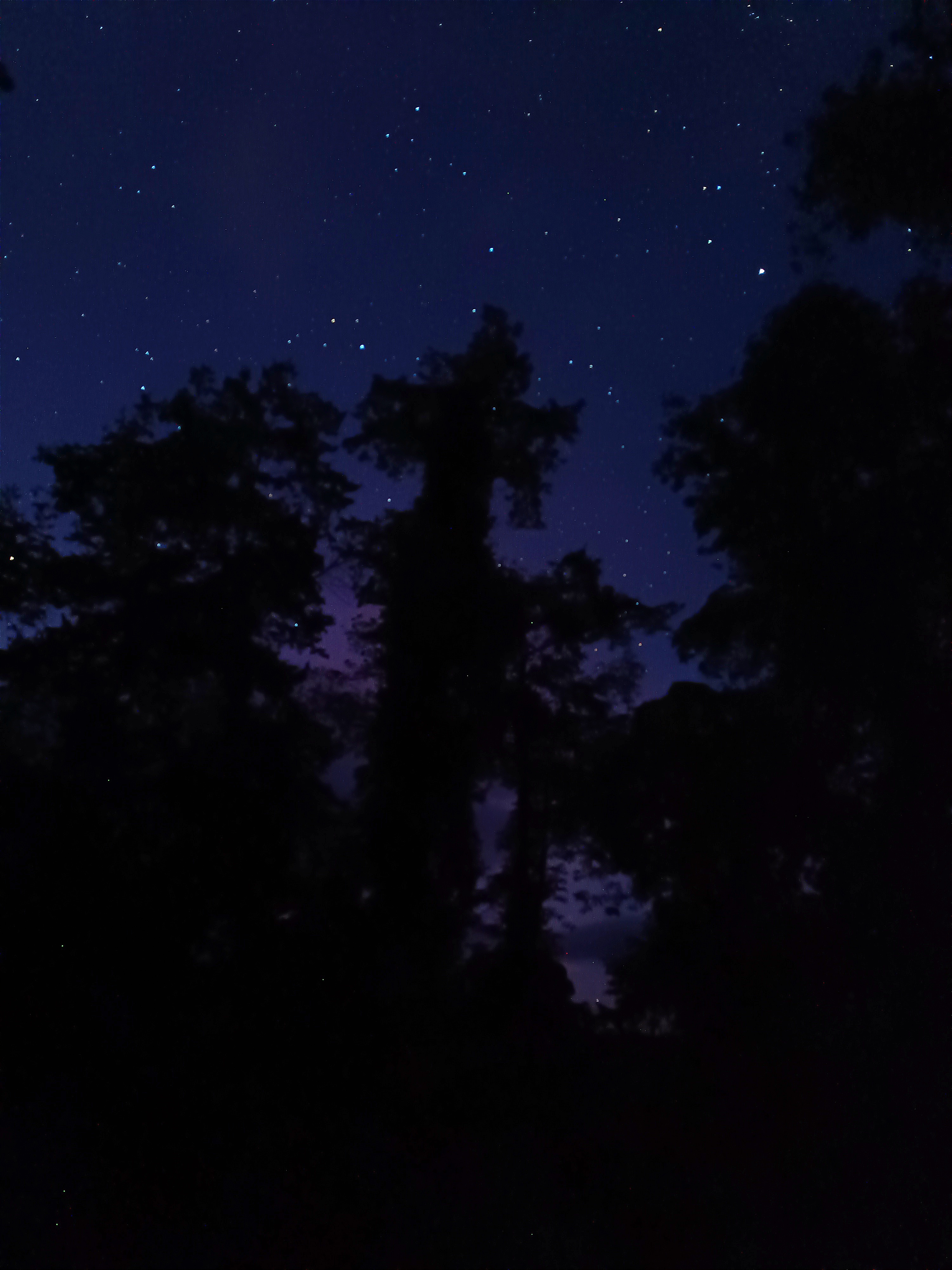
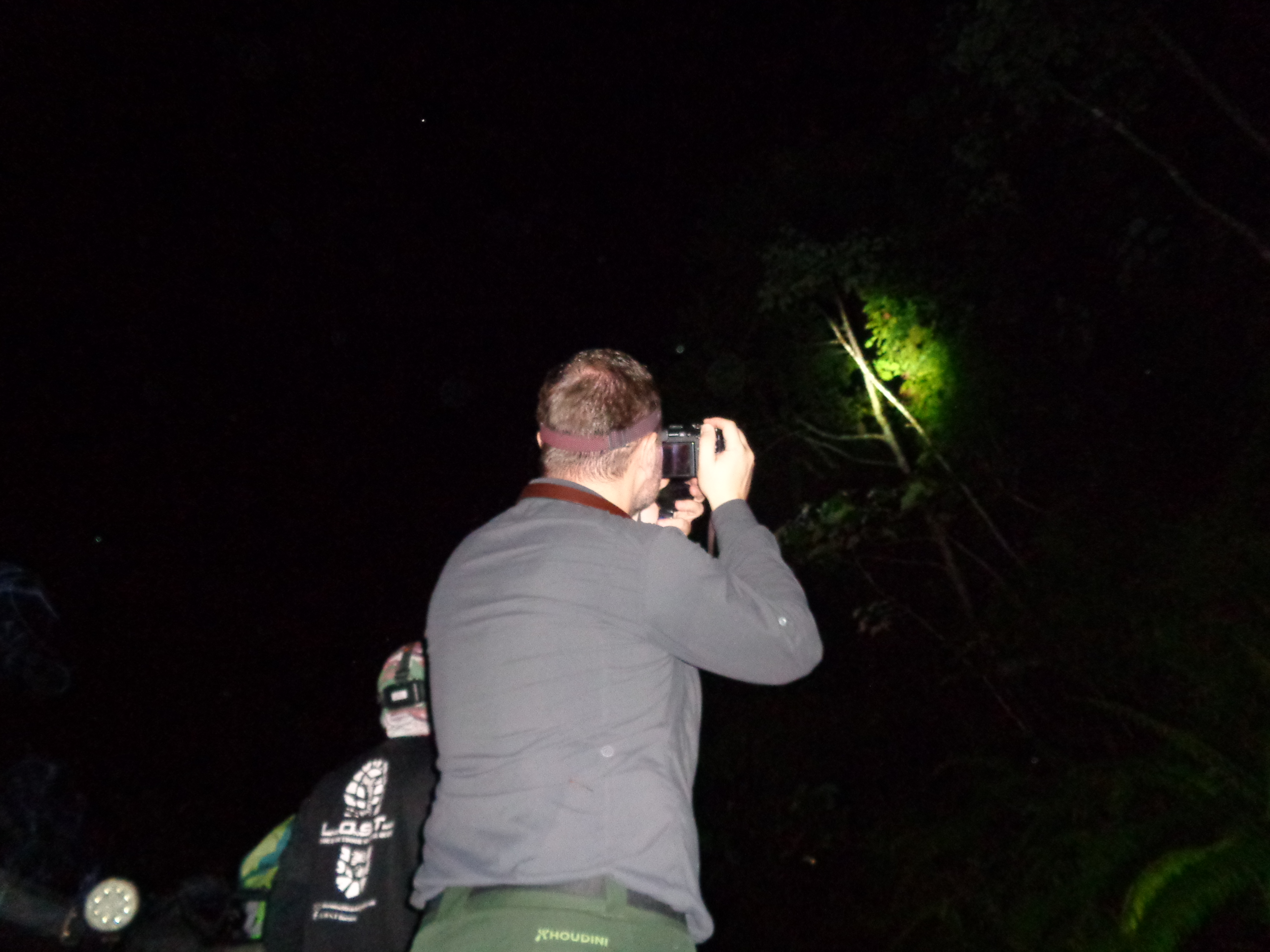
🌙 Night Drives – The Realm of Nocturnal Creatures
Hop into the open-top 4WD after dark to search for night-active mammals. With spotlights in hand and your guide leading the way, keep your eyes peeled for:
🐿️ Flying Squirrels gliding between trees
🐱 Civet Cats, Leopard Cats, and even Clouded Leopards
🐘 Pygmy Elephants quietly moving through the forest
🐻 Sun Bears and Porcupines
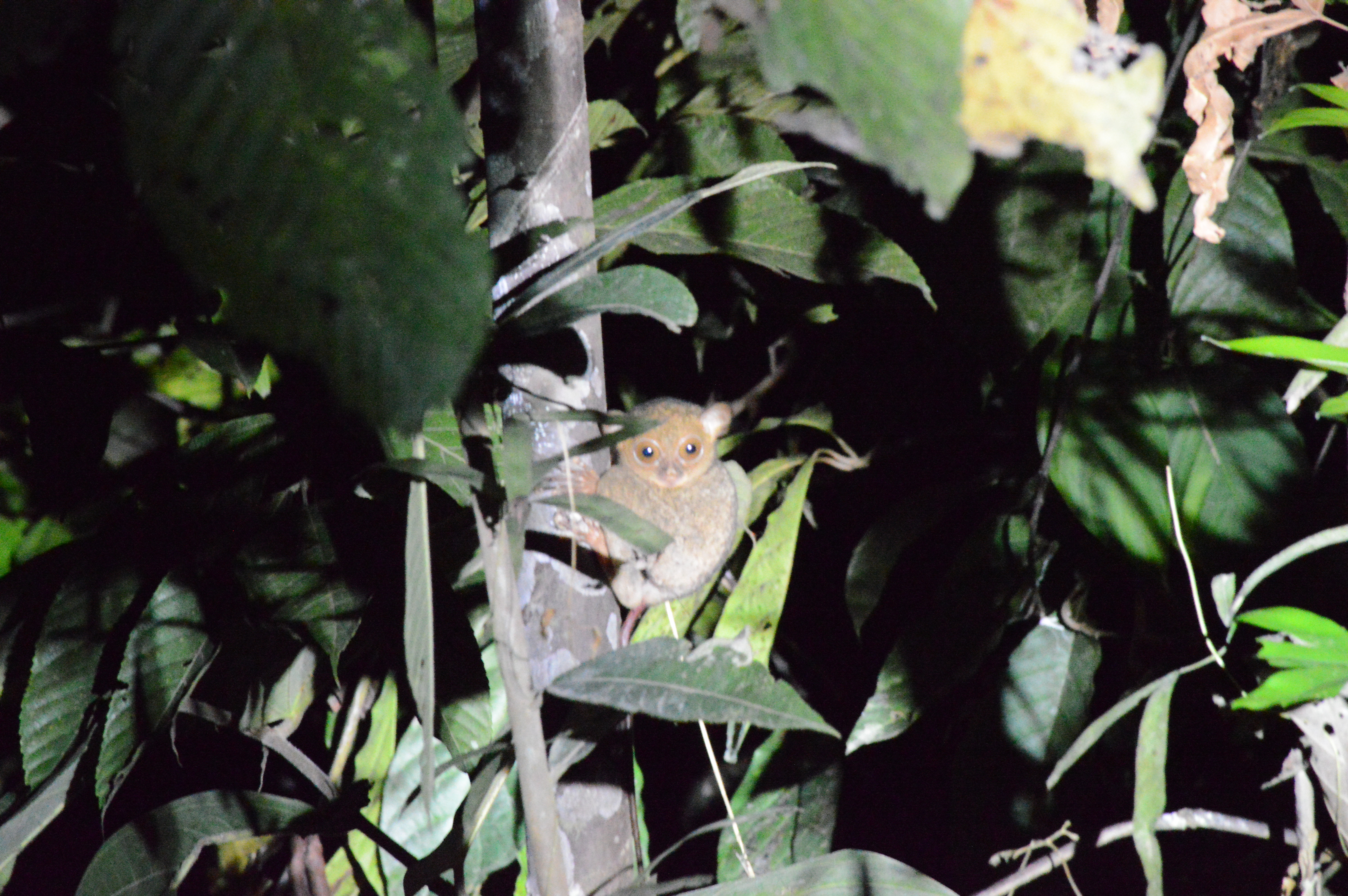
🐸 Slow Loris and Western Tarsier — small, elusive primates
🦉 Owls, Frogmouths, and other nocturnal birds
This is when the forest whispers secrets only the dark can tell.
🌅 Morning & Afternoon Drives – Birds, Primates, and Daytime Mammals
These are the golden hours for:
🦜 Birdwatching: Spot Hornbills, Eagles, Trogons, and more
🐒 Primates: Orangutans, Red Leaf Langurs, Bornean Gibbons, Macaques
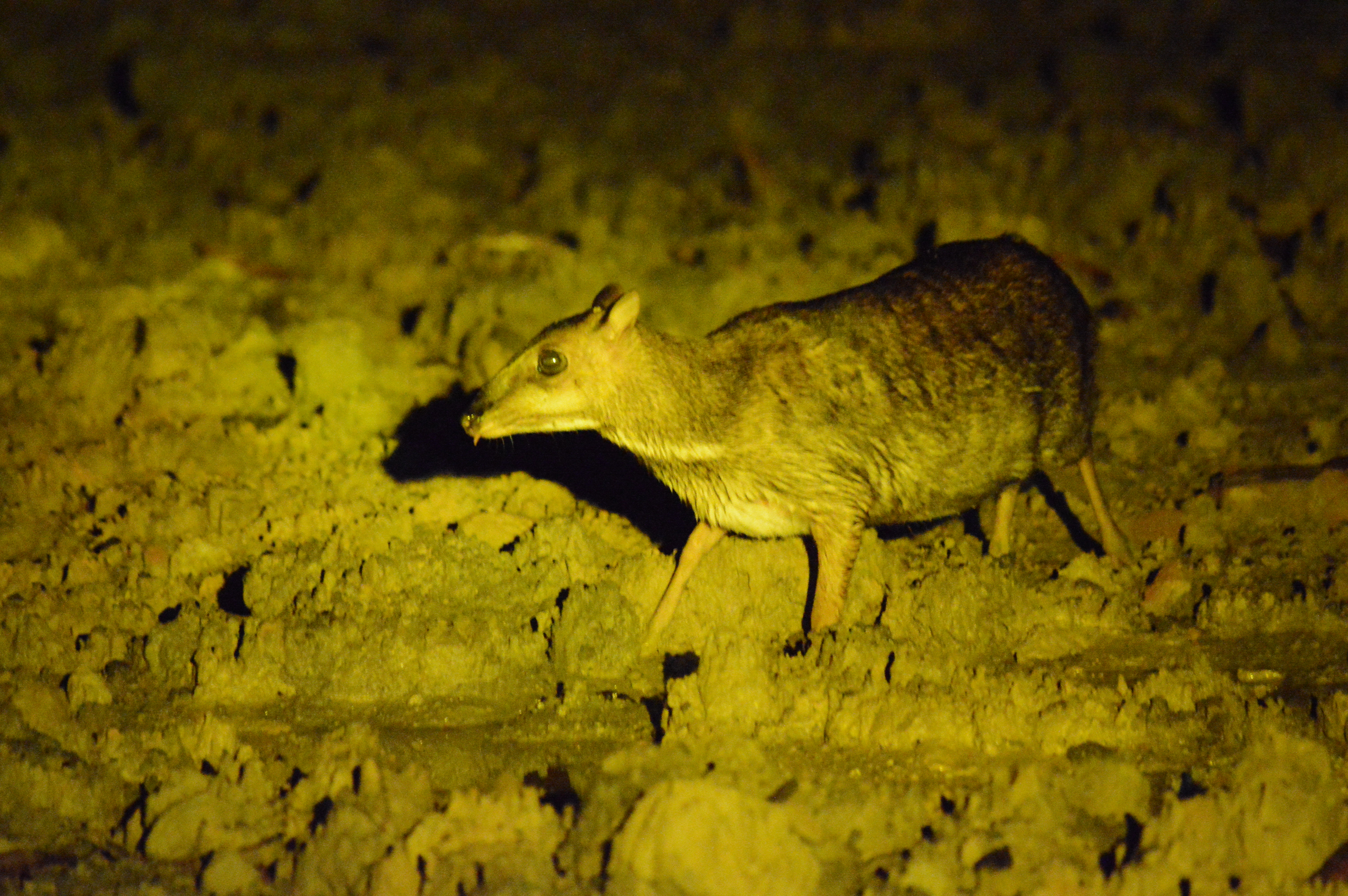
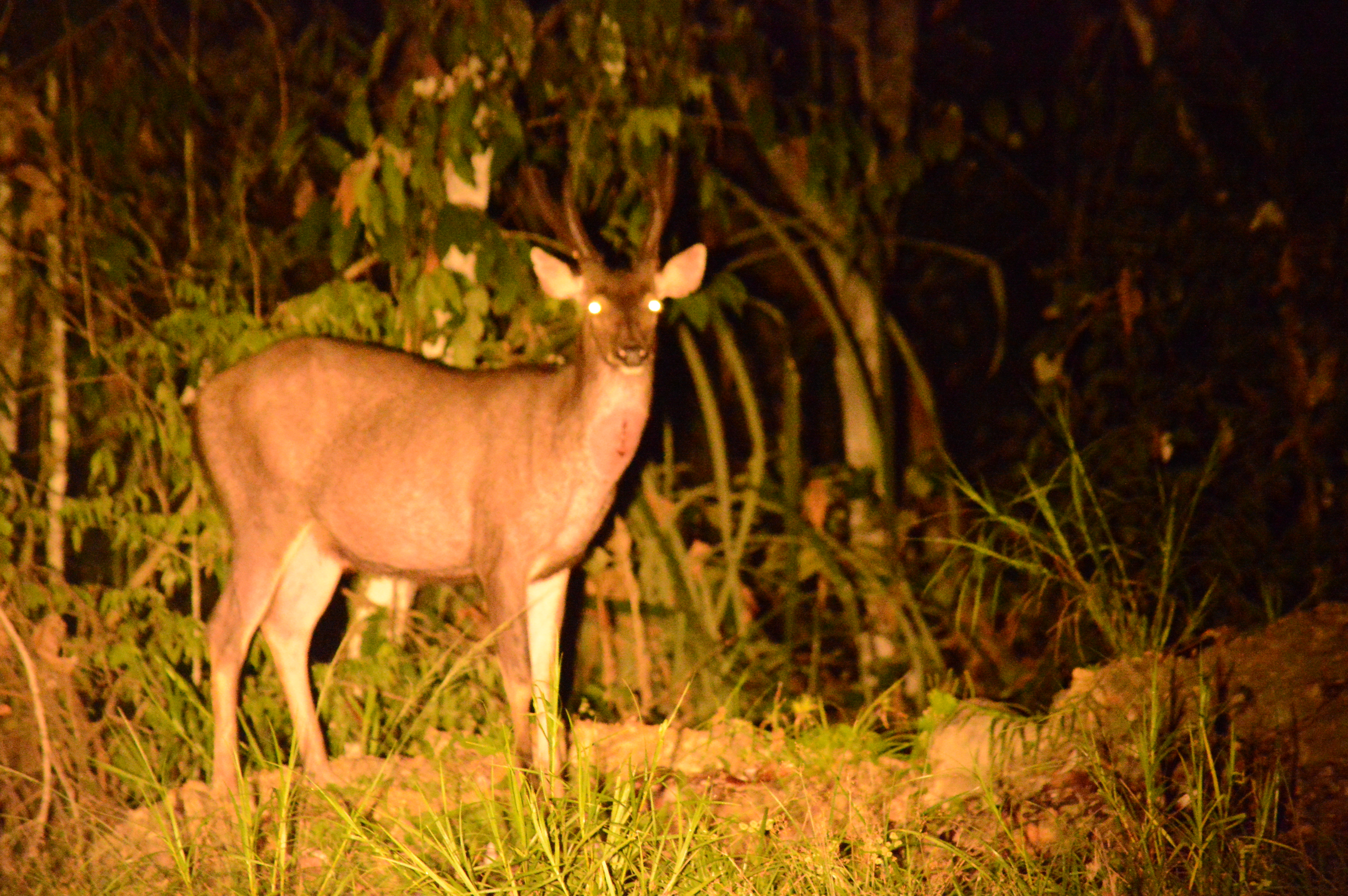
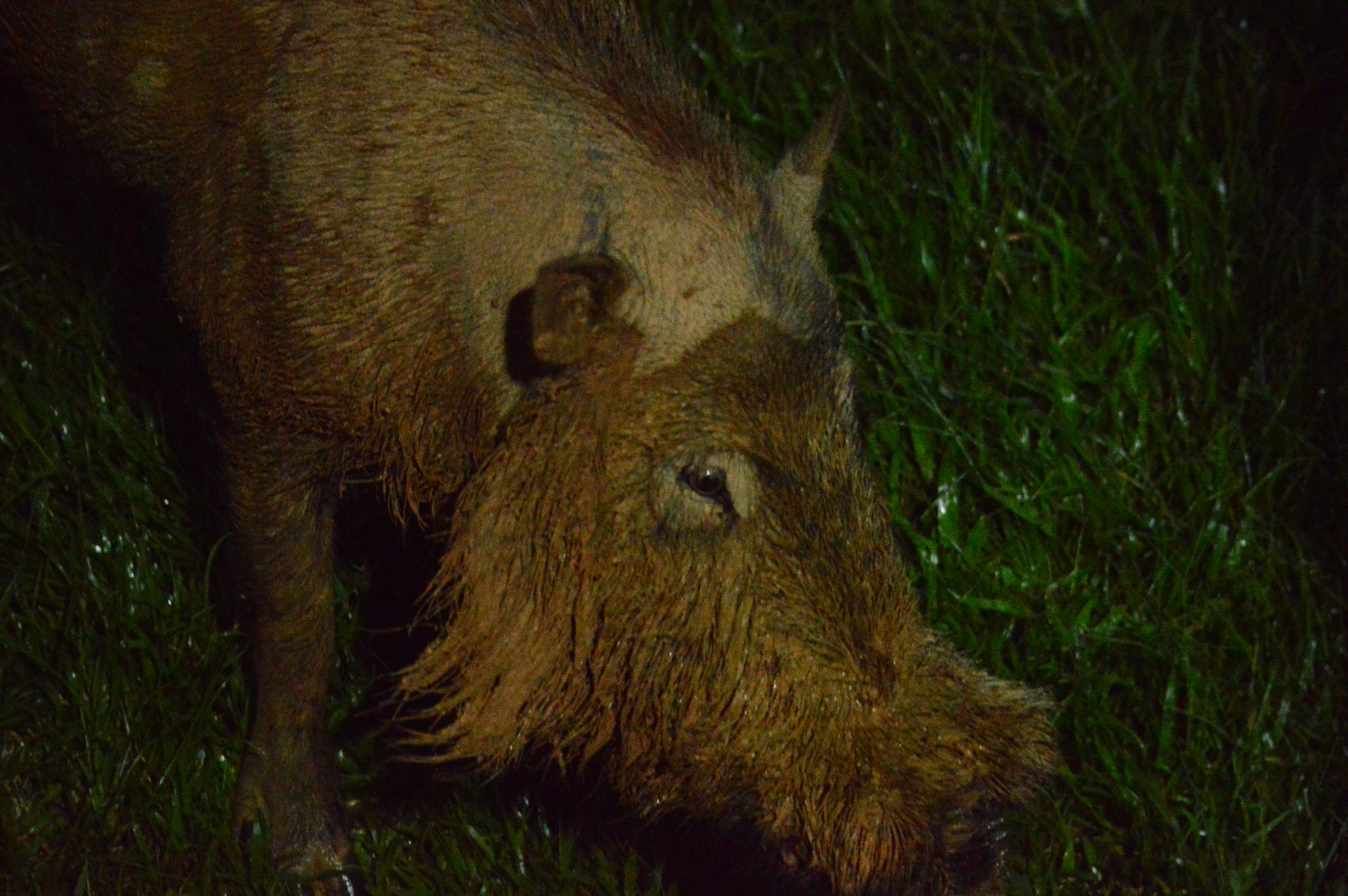
🐘 Daytime mammals like Pygmy Elephants, Wild Boars, Muntjacs, and Mouse Deer
Both drives offer amazing photo opportunities and are typically quieter and cooler than midday walks.
🌿 Jungle Walks – Get up close with the small and strange
Morning Walks: Focus on birdwatching, catching early risers in action
Afternoon & Night Walks: Great for finding insects, spiders, amphibians, and reptiles
Walking gives you the chance to slow down and notice the tiny details — from a giant stick insect pretending to be a twig, to a colorful tree frog nestled in a leaf.
Pro Tip: Bring a headlamp, a zoom lens, and most importantly — a sense of curiosity. Nature always has something unexpected waiting.



FAQ 6: What Should You Bring to Deramakot?
A trip into the heart of the rainforest isn’t just any day out — it’s a real adventure. To make the most of your wildlife experience, here’s a quick packing guide:
🧭 Essentials for Day & Night Activities:
🧥 Rain jacket – Showers can come anytime in the rainforest
🔦 Headlamp – A must for night walks and around the lodge after dark
💧 Refillable water bottle – Stay hydrated, especially during walks
🔭 Binoculars – Essential for birdwatching and spotting animals in the canopy
📷 Camera – With zoom or macro lens, depending on your interests
🦟 Insect repellent – The jungle is beautiful… but the bugs can bite
🎒 Daypack – For carrying your gear comfortably during activities
👕 Recommended Clothing:
🌿 Earth-toned long pants – Helps you blend into the environment and protects from insects
👕 Short-sleeve t-shirt – Lightweight and breathable
👟 Hiking shoes or boots – Good grip is important on wet or uneven terrain
Bonus tip: A small towel, snacks, and a power bank can also come in handy.
Final FAQ, How do i get there? How to book the trip? What is the program looks like? Price?
You can contact us via email at lostborneojungletrekking@gmail.com or chat us on Facebook or Instagram or WhatsApp at +6 013 877 6671 or visit our website
If you love to see more of my jungle and wildlife pictures follow/like our fb and iG.
more about Deramakot in foreign language click here; https://www.wanderlustig.nl/azie/maleisie/borneo/deramakot-forest-reserve/
What are you waiting for? Pack your stuff and get yourself a flight!
See you at Deramakot (happy face emoji)
 lostborneo travel blog